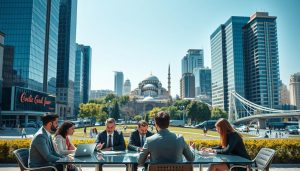
Expanding your business into Turkey is now a viable option for UK founders. It offers a unique blend of European and Asian markets. Turkey’s logistics hubs and export corridors can boost your supply chain and customer base.
The Turkish market is vast, with over 85 million people. It demands a wide range of products and services. With a 3.2% growth rate in 2024, Turkey is seen as a promising investment.
Yet, entering the Turkish market requires careful planning. High inflation and currency volatility can impact costs. These factors also affect the prices of EU imports, influencing your business strategy.
Starting a business in Turkey can be easier than you think. Foreign investors can own 100% of a Turkish company. We’ll guide you through the most popular business ideas and opportunities in Turkey 2025, sector by sector.
At Start Company Formations, we assist with company formation, compliance, and operational setup. We also support business immigration and specialist licensing, including Gaming Licences and FX & Crypto Licensing Companies.
Overview of the Turkish Business Landscape
When we discuss expanding into Turkey with UK founders, we focus on the market’s fast pace. It’s price-sensitive and highly competitive. To succeed, businesses need to localise quickly, find reliable suppliers, and manage cash flow carefully.
Timing is crucial, as much as strategy. Entry costs, lease terms, and hiring plans vary with Turkish Lira volatility and local pricing cycles.
The Turkish economy is expected to grow by 3.2% in 2024. This boosts consumer demand and industrial output. Yet, it’s wise to plan for the impact of inflation on wages, utilities, and daily expenses.
Current Economic Climate
Turkey’s inflation affects prices and payment terms. We suggest creating budgets that can be updated regularly. This way, businesses can adapt to changing costs.
The Turkish Lira’s volatility can make EU imports more expensive. But it also makes Turkish exports more competitive. This benefits firms selling to the EU, the Gulf, and North Africa.
Foreign direct investment in Turkey is influenced directly by these conditions. Costs may be lower at times, but financial planning must account for currency swings and other risks.
- Scenario-based pricing and margin controls
- Supplier diversification across local and EU sources
- Clear treasury rules for multi-currency income and costs
Key Sectors Driving Growth
High-growth sectors in Turkey, like renewable energy and tourism, attract investors. The Customs Union with the EU and established industrial zones also play a role.
- Renewable energy: solar, wind, geothermal, and hydro projects backed by industrial power demand
- Tourism and hospitality: leisure, eco-tourism, wellness, and MICE with year-round city demand
- Manufacturing: automotive supply chains, textiles, electronics, machinery, and food processing
- Technology: fintech, gaming, AI, cybersecurity, and SaaS for regional scale
- Real estate and construction: urbanisation-led schemes and large infrastructure pipelines
- Agriculture and organic products: export momentum with traceability and cold-chain investment
In every sector, it’s important to match opportunities with risk controls. With the Turkish Lira’s volatility and inflation in mind, we guide teams to enter the market with resilience. This way, they can benefit from Turkey’s 3.2% growth and ongoing foreign direct investment interest.
Turquoise Coast Tourism and Hospitality
The Turquoise Coast offers great opportunities for UK founders. It has clear demand and strong assets. Turkey aims for 60 million tourists and $50 billion in tourism by 2025. It boasts an 8,333 km coastline and travel appeal all year.
Antalya, Cappadocia, and Istanbul attract visitors. Turkey’s location between Europe, Asia, and the Middle East helps. This makes it a popular spot for tourists.
The tourism ecosystem in Turkey is growing. The Ministry of Culture and Tourism guides investments. Turkish Airlines expands routes, supporting both long and short trips.
Companies like Doğuş Group and Dedeman Hotels & Resorts set high standards. These are often followed by new businesses.
Ecotourism Opportunities
Eco-tourism in Turkey is becoming more popular. It focuses on nature, like hiking, cycling, and sailing. These activities respect local habitats and water use.
UK operators can offer unique eco-tourism experiences. This can include wellness travel and recovery-friendly environments. Planning for shoulder seasons and local staffing is key.
Unique Hotel Concepts
Unique hotel concepts attract guests faster than generic ones. Shangri-La Bosphorus Istanbul offers luxury. Hillside Beach Club shows how design can encourage repeat visits.
Alaçatı is a great example of how a village can become a tourist destination. It combines design, food, and walkable streets. Boutique hotels in Turkey benefit from smart design and strong service.
Antalya tourism investment works well with clear offers. This includes adult-only, family-friendly, or sport-focused stays. MICE tourism in Turkey is also growing, thanks to reliable transport and meeting spaces.
Culinary Tourism
Culinary tourism in Turkey is easy to build. It focuses on Ottoman history and food. Market visits and chef collaborations make a stay memorable.
For UK sales, multilingual service and direct marketing are crucial. They decide if a package gets booked.
Menu planning that highlights regional produce and seasonal dishes
Authentic cultural elements, from breakfast rituals to local music nights
Operational planning for seasonality and rising Mediterranean competition
E-Commerce Ventures and Online Retail
For UK founders looking to enter Turkey, e-commerce is a good starting point. The market is growing fast, aiming for $25 billion by 2025. Starting from Turkey, we can sell to locals and test international markets quickly.
Benefits of Online Selling
Online shops in Turkey have lower costs and quicker setup than physical stores. We can start with a few products, track sales daily, and adjust prices and stock easily. This flexibility is great for fast-changing markets like fashion and beauty.
Using search and social media together boosts sales. Good SEO in Turkey attracts customers looking for specific products. Instagram and TikTok help increase brand visibility and encourage repeat purchases with engaging content.
Popular E-Commerce Platforms
Hepsiburada and Trendyol are top choices for online shops in Turkey. They set the standard for trust, delivery, and payment. For new businesses, they offer a quick way to start selling without the need for a full website.
Choosing the right platform depends on the product and profit margins. Here’s a simple plan:
- Hepsiburada for wide appeal and visibility
- Trendyol for fast-selling items and promotions
- A branded site for customer data and loyalty
Niche Market Ideas
Niche markets like local fashion, handmade crafts, and organic products are popular. They require good photography and clear product descriptions. These areas also have potential for export.
For those with limited funds, dropshipping in Turkey is a low-risk option. It involves selling products without holding inventory. We can use AliExpress or Shopee Turkey and promote products with short videos. With the right products and delivery promises, this method can be effective.
Food and Beverage Industry Innovations
In Turkey’s food and beverage sector, demand is high and varied. UK founders succeed by blending local tastes with simple operations. They focus on serving well, scaling smoothly, and maintaining consistency every day.
Starting a business or a small chain requires a clear menu and reliable suppliers. In Istanbul and coastal areas, tourists look for specific types of food. Locals, on the other hand, value speed, value, and trust.
Traditional Turkish Cuisine Restaurants
A Turkish restaurant can stand out by focusing on authenticity. Dishes like kebabs and baklava are well-known, but quality varies. This opens up opportunities for those who focus on quality.
We suggest testing formats in busy areas. This includes:
- short menus with a few signature plates and visible prep
- set lunch options for office districts and transport links
- tourist-friendly ordering that keeps names clear without diluting heritage
This strategy boosts repeat business while keeping costs and training manageable.
Healthy Fast Food Concepts
In major cities, healthy fast food is on the rise. People want quick, healthy meals. Vegan options are also popular, mainly among young people and gym-goers.
Small, practical choices can set you apart. This includes eco-friendly packaging, clear calorie information, and fresh add-ons. Menus focused on grilled proteins, grain bowls, and seasonal salads also do well.
By doing this, you can offer fast service without compromising on food quality.
Coffee Shop Trends
Coffee is a popular habit, which is why cafés in Istanbul are growing. Customers look for good espresso and a welcoming atmosphere. They also value seating, lighting, and the overall vibe of the space.
To attract more customers, many list on Yemeksepeti and offer delivery. Strong branding, positive reviews, and a consistent morning offer can increase footfall. This is true for both local streets and tourist areas.
Renewable Energy Start-Ups
UK founders looking at Turkey will find renewables a promising area. The aim is to hit 30% of energy from renewables. This goal shapes budgets and plans across the country.
Start-ups can help in many ways, from initial studies to ongoing operations. The best opportunities are near resources and good grid access. Having solid offtake agreements is also key.
Solar Power Installations
Solar is a quick way to start, perfect for small businesses. It offers predictable bills and fast setup. In sunny areas, solar can pay off even with high upfront costs.
Big solar projects also boost the supply chain. Kalyon Karapınar 1 GW is a good example. It opens doors for various services, like mounting systems and monitoring.
Wind Energy Projects
Onshore wind is attractive where permits and grid access are easy. Western Turkey is a hotspot for wind projects. It offers steady power and long-term deals.
Güriş Dinar 80 MW is a benchmark for wind projects. Start-ups can focus on turbine care and forecasting. These areas need more support.
Government Incentives
Revenue support is still important, with Turkey’s feed-in tariffs helping. EBRD also offers funding for renewable projects. But, incentives should not be the only focus.
Tax breaks and customs exemptions can cut costs. The Ministry of Energy and Natural Resources sets the rules. This affects timelines and licensing.
Be ready for challenges like slow permits and high upfront costs. Partnering with local firms helps. Combining technologies, like geothermal, can also strengthen your offer.
- Target high-resource zones first, then expand once grid access and contractors are proven.
- Build a compliance plan early, including land rights, environmental steps, and connection studies.
- Consider multi-source operations to smooth output and strengthen offtake discussions.
Real Estate and Property Development
For many UK founders, property is more than just an asset. It can be a base for teams, storage, or a customer-facing site. Real estate investment in Turkey can support daily operations and build long-term value.
Decisions are often influenced by rapid urbanisation and transport upgrades. Foreign property acquisition in Turkey is seen as straightforward. Yet, it’s crucial to check title, zoning, and local rules before investing.
Renewal is another theme. Urban transformation in Turkey is replacing older stock with new. This can change a neighbourhood’s risk profile and tenant mix. It’s useful for modern layouts and stronger resale liquidity.
Favourable Conditions for Investors
We consider a location’s suitability for your business first. Then, we look at the numbers. Demand is driven by infrastructure, employment nodes, and liveability, not just prices.
Currency moves can affect entry cost and debt planning. It’s wise to stress-test budgets in both pounds and lira.
- Clear investment thesis: operations-led, income-led, or development-led.
- Local due diligence: title records, seismic compliance, and service charges.
- Exit logic: resale depth, buyer profile, and timing risk.
Commercial Property Prospects
Commercial demand clusters around major hubs and transport lines. Pricing follows supply and demand in a free-market setting. We track mixed-use developments like Emaar Square and Zorlu Center.
These nodes can boost footfall and brand visibility for firms entering the city. Cycles matter, though. Some sub-markets face oversupply, affecting performance.
Residential Project Opportunities
Residential demand is driven by movement into major cities and a growing middle class. Istanbul rental yields 5-7% in established areas. Yet, it depends on unit size, finishing quality, and transport access.
We treat yields as a starting metric. Then, we test net returns after maintenance, taxes, and voids. Development pipelines shape value creation. Urban transformation creates new supply in built-up districts.
Technology and IT Services
For UK founders, Turkey’s tech scene is both familiar and fast-paced. It has a young workforce, high mobile use, and steady investment. This makes digital services a good entry point into the market.
Big wins set the bar high. Peak Games Zynga’s $1.8bn deal shows global buyers value Turkish teams. Getir and Insider SaaS also highlight Turkey’s talent in logistics and marketing tech.
Software Development Agencies
Turkey’s software development agencies are known for their speed, skill range, and cost-effectiveness. They excel in mobile, web, QA, and data-heavy projects. This suits UK firms needing quick, high-quality work.
Choosing the right location is key. Many companies set up R&D in tech parks for tax benefits. They also stay close to universities for talent and collaborations.
- Build a delivery model that blends local engineering with UK-facing product ownership
- Use pilot projects to validate sprint cadence, tooling, and code review standards
- Plan hiring around graduate intakes and specialist communities in the Turkish tech ecosystem
Cybersecurity Firms
More businesses moving online increases the need for cybersecurity. SMEs need managed detection, security audits, and staff training. This is crucial for handling customer data and card details.
The payments boom adds pressure. Turkey’s 20% annual growth in e-payments means more transactions are at risk. Security providers that explain risk clearly tend to win trust faster.
IT Consulting
IT consulting helps UK teams succeed in Turkey by reducing risk. It includes cloud migration planning, vendor selection, and infrastructure sizing. It also ensures compliance across sectors.
Before agreeing to a contract, buyers often ask for proof. A clean GitHub portfolio shows engineering depth, documentation habits, and secure coding. It keeps conversations focused on outcomes, not promises.
Creative Arts and Media Enterprises
In Turkey’s creative industries, media and culture blend well with tourism and trade. Brands often seek story-driven campaigns. Cities look for new ways to showcase cultural experiences to visitors.
Istanbul is a great place for creative businesses. It has a strong talent pool, varied venues, and steady demand. Success comes from treating creativity as a service, with clear plans and deadlines.
Film and Television Production
Turkey is perfect for film and TV production. It offers a wide range of locations, from coastlines to heritage streets. This variety is great for commercials, documentaries, and location shoots.
Plan for permits, insurance, and crew expectations early. Local fixers, casting, and post-production help keep quality and costs in check, even when time is tight.
Digital Content Creation
Digital content in Turkey thrives on mobile use and fast social platforms like Instagram and TikTok. Agencies create travel reels, food stories, event coverage, and product demos for exporters and hotels.
Producing content in multiple languages is key. Subtitles, voiceovers, and culturally aware scripts help content reach Europe and the Middle East without losing its message or brand tone.
Art Galleries and Exhibitions
Galleries and pop-up shows fit well with Turkey’s tourism, where hotels and busy areas meet. In Istanbul, exhibitions can become ticketed events, brand partnerships, and curated shops.
As the market grows, following rules becomes crucial. Check licensing, venue rules, and tax for sales and imports. This ensures exhibitions can grow and stay attractive to investors.
Health and Wellness Sector Growth
In Turkey, healthy living is becoming a daily habit, not a luxury. UK founders see this as an opportunity to start a wellness business in city centres and tourist spots. People want services that are safe, modern, and easy to book.
There’s a strong link between lifestyle services and health travel. Medical tourism in Turkey now includes prevention, recovery, and stress management. This mix attracts more visitors and keeps them coming back all year.
Fitness Centres and Gyms
In cities like Istanbul, Ankara, and Izmir, more people are joining gyms. They look for gyms with clear membership options, small-group coaching, and progress tracking. People want to see results and enjoy a clean, well-organised gym.
We suggest focusing on consistency and building trust. This means training staff, keeping members happy, and partnering with local businesses. A well-focused gym can compete with cheaper gyms by offering more value.
Membership models that reward attendance and referrals
Recovery add-ons, such as mobility sessions and guided stretching
Simple digital booking and class caps to avoid overcrowding
Spa and Wellness Retreats
Tourism is moving towards more upscale experiences, with a focus on calm, nature, and personal care. Spa retreats in Turkey can attract both local and international visitors. The best retreats blend local charm with high service standards.
Medical leaders boost confidence in the wellness sector. Groups like Memorial Healthcare Group are known for their role in medical tourism. This reputation helps with related services like relaxation and recovery stays. It opens up opportunities for packages that include everything from accommodation to therapies.
Organic Health Products
There’s growing interest in health products, with a focus on natural ingredients and low-fragrance personal care. In Turkey, organic health products are becoming more accessible through specialist shops, pharmacies, and online. People want to know about the ingredients, batch consistency, and packaging.
The beauty market is also growing, with cosmetics sales increasing by 10% each year. This growth benefits other health categories, like natural supplements and clean skincare. UK entrepreneurs can scale their businesses by focusing on quality, reliable supply chains, and clear product claims.
Agricultural and Organic Farming
Agriculture is a key part of Turkey’s economy. It offers a solid start for entrepreneurs looking for real-world supply chains. In Turkey, we can create a system that connects land, people, storage, and markets without making things too complicated at first.
Sustainable Farming Practices
Today, people want to know more about how their food is made. This makes organic farming in Turkey a great choice for brands that can show they care about quality and where things come from.
Using new farming methods can also save water and make crops more stable. Hydroponic farming in Turkey is often considered, as it works well where space is limited or weather is unpredictable. It allows for growing food all year round and uses cleaner materials.
- Soil health plans, crop rotation, and measured fertiliser use
- Cold chain basics to reduce waste from field to shelf
- Simple batch records to support audits and buyer confidence
Organic Product Export Opportunities
Turkey is a big player in agriculture, and demand for organic products is growing. For exporting fruits, vegetables, and nuts, the main challenge is meeting the needs of each market.
Processing can increase profits and help you avoid price changes. For example, processing olive oil and honey in Turkey works well. It’s important to have consistent sources and clear standards for packaging and labelling.
To grow while keeping things under control, we often suggest starting small. Begin with a small plot, test local markets and online sales, and then expand through partnerships with Migros once you have a steady supply.
- Start with a few products and strict quality checks
- Prove you can supply regularly through seasonal planning and storage
- Expand into processing, then formal retail distribution
Urban Agriculture Initiatives
Urban growth is making people interested in growing food in cities. This supports better living conditions and reduces food travel. Hydroponic farming in Turkey is good for city spaces, like rooftops and warehouses, where steady production is key.
These urban models can work alongside organic farming in Turkey. They can supply special produce to local restaurants and shops. This can help build a local customer base while preparing for exporting fruits, vegetables, and nuts.
Fashion and Textile Industry Trends
UK founders have a unique opportunity in Turkey. It offers speed, skill, and scale in textiles and apparel. Turkey’s deep supplier network makes it easy to test and adjust products quickly.
Turkey is also a reliable manufacturing hub for quality control and flexible orders. This setup helps brands serve both local and international markets efficiently.
Eco-Friendly Fashion Brands
Sustainability is key in fashion now. Turkey allows founders to use eco-friendly materials and design. This way, they can meet customer expectations while keeping production costs in check.
It’s important to plan costs carefully. This includes materials, dye houses, and sampling. This helps in pricing and presenting a strong brand story.
Local Handicrafts and Artisanal Products
Local fashion in Turkey is boosted by tourism and gifting trends. Handmade crafts that highlight place and technique are popular. Showing the making process and materials is crucial.
Social commerce on Instagram and TikTok is great for testing demand. Short videos and limited drops can help gauge interest before large production.
Fashion Retail Start-Ups
Retail start-ups need to plan their sourcing and sales together. Turkey’s fast production times are ideal for seasonal collections. It also helps in building a reliable supply chain.
Choose a clear route to market: own site, marketplaces, or wholesale accounts.
Set product standards upfront: sizing rules, fabric specs, and acceptable tolerances.
Build for cross-border trade from day one, with clean paperwork and consistent labelling.
Education and Tutoring Services
Education in Turkey is growing, with steady demand and low costs. For UK founders, it’s a great way to start in digital services and corporate training. The online education market in Turkey is expected to hit $1 billion by 2025.
Language Schools and Courses
Learning languages is a popular choice, driven by job needs. English courses in Turkey are available for adults, teens, and specific jobs like hospitality and sales.
Combining language learning with employability skills works well. Adding coding courses in Turkey can improve learner retention and prepare them for tech jobs.
Online Tutoring Platforms
Online learning makes it easy to test and refine offerings. Teams often start with Udemy Turkey for video lessons and add live sessions for feedback and practice.
Zoom tutoring is great for small groups and 1-to-1 lessons, without needing a physical space. With Turkey’s online education market set to reach $1 billion by 2025, we can focus on what works and scale up.
Educational Consulting
Consulting is a good match for training, helping SMEs upskill. We assist with curriculum planning, training needs analysis, and creating learning paths for specific roles.
This work includes helping companies adopt digital skills programmes. It’s perfect for Turkey’s push towards digital transformation, where learning outcomes are key.
Curriculum design and assessment that matches workplace tasks
Corporate training plans that blend Udemy Turkey content with live workshops
Delivery models that combine on-site sessions with Zoom tutoring for continuity
Import and Export Businesses
For many UK firms, trading with Turkey is a natural step after they’ve done their market research and made their first sales. Turkey’s location makes it easy to get goods to Europe, Asia, and the Middle East quickly. This can help with planning and managing stock better. If you’re part of the Turkey customs union EU, shipping can be smoother if your paperwork is in order.
Key Products in Demand
Textiles and clothing are always in demand, thanks to their quality and the need for repeat orders. Automotive parts, like those for servicing and fleet maintenance, also do well. In electronics and machinery, buyers look for clear specs, warranties, and reliable supplies.
For food, food processing outputs and agricultural goods are big sellers. This includes fruits, vegetables, and nuts, as well as processed items like olive oil and honey. These can be sold wholesale or in specialist retail, as long as labelling and shelf-life are managed well.
Regulations and Compliance
Trade rules can make or break a deal, so it’s crucial to understand them before quoting prices. Under the Turkey customs union EU, many industrial goods can move duty-free with an A.TR certificate. For other cases, a EUR.1 certificate can help get reduced or zero duties if a preferential arrangement applies.
Not all products are treated the same, and some, like certain agricultural and steel goods, have their own rules. It’s wise to map product codes, origin evidence, and shipment terms early. This way, document checks won’t slow down deliveries. Correct documents can also make exporting from Turkey easier, reducing border friction.
Starting an Import-Export Business
To trade confidently, start with a clean setup and traceable records. Many firms choose a Limited Liability Company (LLC) or a Joint Stock Company (JSC). Then, register through the Trade Registry Office and publish in the Turkish Trade Registry Gazette. This makes it easier to align contracts, invoices, and banking for cross-border settlements.
- Confirm product scope, standards, and origin evidence before ordering or production.
- Set a documentation pack for each lane, including the A.TR certificate or EUR.1 certificate where appropriate.
- Build a repeatable process for importing into Turkey compliance, from labels to customs declarations.
- Keep company records consistent with the Turkish Trade Registry Gazette details to avoid mismatches in trade paperwork.
Event Planning and Management Services
Event services in Turkey blend hospitality, transport, and design. For UK founders, managing events in Turkey is a smart entry. Venues, suppliers, and tourism support quick event setup. Turkish Airlines connects key cities, making site visits and client meetings easy.
As MICE tourism in Turkey grows, so does demand for events. Well-planned events can keep hotels and local businesses busy all year. This helps maintain steady income.
Corporate Event Coordination
Corporate events aim to generate leads, align teams, or hold partner meetings. Istanbul’s large venues, top AV suppliers, and flights make it ideal for guests from various places.
In Turkey’s MICE tourism, clients want reliable standards, tight schedules, and calm event control. We focus on venue booking, delegate management, and compliance to ensure smooth events and stay within budget.
- Venue sourcing and supplier procurement, with service-level agreements
- Registration flow, badge control, and attendee communications
- Interpretation and bilingual staffing for international groups
Weddings and Special Occasions
Destination weddings in Turkey attract couples seeking stunning views and rich heritage. Top operators offer bundled services like rooms, catering, photography, and transport. This simplifies planning for overseas clients.
For weddings, multilingual services are crucial to avoid misunderstandings. Digital marketing is also key, as most inquiries come from social media, search, and hotel referrals.
Cultural and Music Festivals
Festivals can grow fast by aligning with local culture and visitor interests. Cultural festivals in Turkey draw visitors interested in food, music, and art. This boosts shoulder-season tourism and encourages repeat visits.
Large festivals require strict control over permits, noise, and safety. Strong contracts with suppliers for stages, security, and crowd management are essential. This is crucial for events in open-air sites and busy city centres.
Niche Consultancy Services
Starting a consultancy in Turkey can be a cost-effective way to begin. It can run alongside other ventures. It’s great for testing the market, building local connections, and understanding customer needs.
With the right approach, it also helps with setting up a company and planning for legal requirements.
Business Consulting
Small to medium-sized businesses are moving online, creating a steady need for consulting services in Turkey. Retail, hospitality, and tour operators often need help with their offers, pricing, and booking systems. They also look for ways to improve their online visibility without spending too much on ads.
It’s important to understand local search habits, as they can vary by city and season. We suggest starting with a few key services, focusing on results, and building a local portfolio. Once you have case studies, you can use platforms like Fiverr and Upwork to grow your client base while keeping your operations in Turkey.
Legal and Regulatory Advice
Legal advice is crucial at the start, covering everything from choosing a business structure to the first day’s paperwork. Clients often compare different options, check capital requirements, and prepare necessary documents. The process involves filing with the Trade Registry Office, where timing and accuracy are key.
Compliance is an ongoing task, not just a one-time thing. It includes corporate taxes, VAT, stamp duty, and payroll. Employers must also register with the Social Security Institution (SGK) and make monthly contributions, which affects cash flow.
When moving to Turkey, founders or key staff may need immigration advice. Some businesses require special permissions, like Gaming Licences or FX & Crypto Licences. These are often part of the company formation process, ensuring everything aligns.
Market Research Firms
Decisions in Turkey should be based on solid data, as different regions have different needs. Real estate demand, tourism, and customer profiles can change significantly. Market research helps identify the best locations and target audiences.
Understanding spending patterns in major cities and coastal areas
Mapping competitors and checking market channels, including online platforms
Testing prices and messages before investing in stock or leases
With clear data, teams can focus on what to launch first and what to delay. This approach reduces unnecessary work and ensures consistent delivery across various services.
Final Thoughts on Entering Turkish Markets
Expanding into Turkey can be a wise choice for UK founders. It offers a large market and a strategic location. But, you must be ready for inflation and currency changes.
Key Considerations for Investors
Choosing the right sector is crucial. Look at renewables, tourism, and tech for steady demand. A good plan and local partners are key for a smooth start.
Deciding on LLC or JSC is important. LLCs are good for SMEs, while JSCs suit bigger ventures. Starting a company in Turkey involves paperwork and registration.
Banking is a critical step. You need 25% of your capital in a Turkish bank before you can register. With everything ready, you can register in about a week.
Resources for New Entrepreneurs
Compliance is essential for a stable business. We help with tax, labour laws, and employee registration. Opening a corporate account is also vital for financial management.
Trade in Turkey is easier thanks to the EU Customs Union. But, you’ll need the right certificates and paperwork for customs.
Contact Start Company Formations at 0204 504 1544
Start Company Formations helps with setting up and compliance in Turkey. We also assist with immigration and licensing. For help, call us at 0204 504 1544.