When you grow across borders, your patents, trade marks, designs, and software are key. In Europe, the best country for IP depends on what you need. This could be strong enforcement, specialist courts, or efficient filing.
For UK-led groups, choosing where to hold IP is a big decision. It affects your business. You need to decide where to register rights, enforce them, and where to make money from licensing.
This guide explores the top European IP spots for businesses. We look at why they’re chosen. It’s about filing EU-wide and choosing countries for disputes and income planning.
Why location matters when you hold IP in Europe
When we help UK founders expand, we often see the same surprise: Europe is not one neat rulebook. It is a patchwork of national laws, plus shared systems such as EUIPO for the European Union Trade Mark and Community Design. Even then, disputes are still decided locally, so your Intellectual Property Europe jurisdiction choice shapes both protection and leverage.
Registration versus enforcement: why the jurisdiction still matters
Filing can feel straightforward, but outcomes depend on where you may need to act fast. This is the real tension in IP registration vs enforcement: an EU-wide right can exist on paper, yet enforcement still runs through national courts. That can affect interim injunctions, evidence rules, and how confidently you can stop copycats in a key market.
For UK businesses, this matters even more post-Brexit. We plan for separate UK and EU coverage, but we also plan for where a dispute is most likely to land, and what a court there tends to do in practice.
Cost-efficiency, speed, and access to specialist IP courts
We weigh not only filing fees, but the full life cycle cost of ownership. Some venues are quick for administration, but slower or less predictable when conflict hits. Access to specialist IP courts Europe can change the tone of a dispute, because experienced judges tend to move faster and handle technical detail with less friction.
It helps to compare jurisdictions through a practical lens:
- How quickly can you get urgent relief, such as an interim injunction?
- How consistent are damages awards and procedural timetables?
- How easy is it to gather evidence and enforce orders across borders?
Tax treatment of royalties, licensing fees, and gains on IP
Location also shapes the return you keep. With cross-border licensing, the day-to-day questions are often about royalties tax Europe and how payments are treated in the paying and receiving countries. Add withholding tax, transfer pricing, and substance expectations, and the headline rate rarely tells the full story.
We also look at how licensing income tax is taxed under local rules and available reliefs. Depending on structure and activity, patent box style regimes may reduce the effective rate on qualifying IP income. The same planning lens applies to exits, because capital gains on IP can be taxed very differently from ongoing royalty flows.
In practice, the streams that can be affected include:
- Royalties and licensing fees from third parties or group companies
- Sales of goods and services that embed protected technology or branding
- Damages or settlements linked to infringement claims
- Gains on disposal of patents, trade marks, software rights, or designs
Intellectual Property Europe: what businesses mean by “holding” IP
When we say “holding” IP, we mean putting key rights in a special owner entity. This entity is separate from the daily business. An Intellectual Property Europe holding company manages IP, while other companies handle sales, staff, and contracts.
This setup makes decisions clearer and keeps valuable rights organised. It’s a common approach in many businesses.
This method fits into a bigger IP holding company structure. It has clear roles for ownership, management, and use. It’s useful for groups wanting consistency, good governance, and a single place for tracking IP.
IP holding companies and asset isolation from operating risk
A holding company owns IP and licenses it out. This way, each trading subsidiary takes on its own commercial risk. This is key to IP asset isolation.
If a trading business faces a dispute or debt issue, the IP owner is not automatically affected. This is good risk management for UK-based groups.
Monetising IP through licensing, royalties, and group charging
Once ownership is clear, making money from IP is easier. IP licensing Europe covers deals, distribution, and technology access. It outlines territory, duration, and use.
In a group, the same logic applies for trading under a brand or deploying a platform. Many groups use group royalty charges or wider group charging models. This way, the IP owner gets paid for its value.
External licensing: royalty income from partners using the IP under contract.
Intra-group licensing: operating subsidiaries pay for access and support.
Service-linked charging: combined fees for IP use plus management or maintenance.
Common IP assets: patents, software copyright, trade marks, and designs
The portfolio often includes different types of IP. Each asset has its own value. In Europe, patents and software rights are often discussed, as they can be traced to development and technical output.
Brand-led businesses focus on trade marks and designs. These protect market identity and product look-and-feel. It’s helpful to list assets clearly and match them to their use, evidence, and licensing path.
Patent box regimes and IP tax incentives across Europe
When setting up an IP holding structure in the UK, tax treatment is key. Across patent box Europe, countries offer a lower tax rate on certain IP income. This helps keep profits in the country.
What a patent box is and why countries offer it
A patent box lowers corporate tax on income from qualifying IP. It’s part of a broader plan to boost innovation. Countries aim to attract R&D teams and keep IP development local.
The rules seem simple at first but can get complex. We see it as a compliance project, not just a tax rate.
Typical qualifying income: royalties, licence fees, sales tied to IP, and damages
Most regimes focus on income tied to protected IP. They require clear evidence and strong transfer pricing. Income like royalties and licence fees are key.
- Royalties received under licensing arrangements and intra-group charges
- Licence fees IP linked to products, platforms, or embedded technology
- Income from sales where the price is driven by patented features or protected know-how
- Settlements and awards that may fall under IP damages tax, depending on the country’s scope and documentation
Why patent boxes can add complexity and may not always drive innovation
Patent boxes add complexity with new definitions and tracking. You might need to separate income streams and track eligible costs. For UK groups, the substance matters as much as ownership.
There’s debate on their impact. Some say they might just shift profits rather than drive R&D. We advise careful modelling of IP income and potential tax outcomes before relying on these rates.
Countries in Europe with patent box regimes
When we plan an IP holding strategy, we start with a clear map of countries with patent box Europe options. We also consider the compliance burden of each one. For UK-based groups, this overview helps us compare relief on qualifying profits with the real-world need for staff, decision-making, and R&D activity in the same place.
Patent box benefits can look simple on paper, yet the real result is the effective tax rate IP income. This is after applying nexus rules, local adjustments, and group pricing. That is why we look at rates as a guide, not a promise, and we test them against how you actually create and manage IP.
EU Member States with regimes in place
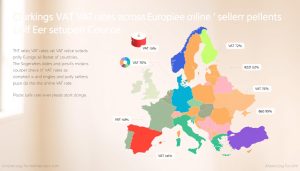
In the EU patent box list, 13 of the 27 Member States have a regime in place. These are Belgium, Cyprus, France, Hungary, Ireland, Lithuania, Luxembourg, Malta, the Netherlands, Poland, Portugal, Slovakia, and Spain.
Spain is often discussed with regional references, including federal, Basque Country, and Navarra, because local rules can change the picture. Across these EU choices, reduced rates have been observed from 1.75% in Malta up to 14.45% in France, which helps when benchmarking likely outcomes.
Non-EU European countries using patent box style incentives
A non-EU patent box can still matter if your market, teams, or ownership sit outside the bloc. In Europe, regimes are also seen in Albania, Serbia, Switzerland, Turkey, and the United Kingdom.
For UK businesses, this matters when we need to align legal protection, commercial licensing, and where value is created. It can also shape how profits move through a group, where there are multiple operating companies using the same technology.
How additional R&D incentives can reduce effective tax rates further
Patent boxes are only one lever. Many jurisdictions also offer R&D tax credits Europe-style support, targeted grants, or accelerated depreciation for R&D assets. These can shift cashflow as well as tax.
Used well, these tools can reduce the effective tax rate IP income below the headline patent box rate. This depends on qualifying spend, timing, and documentation. We treat the combined package as part of a wider plan for substance, transfer pricing, and audit-ready records, not a standalone saving.
OECD BEPS and the Modified Nexus Approach: compliance essentials
Planning where to hold intellectual property in Europe is now more complex. This change started in 2015 with OECD BEPS Action 5. It set a common standard for IP regimes. For UK businesses, this means real activity is key, not just legal ownership.
What the Modified Nexus Approach requires in practice
The Modified Nexus Approach focuses on assets and income that can get a lower tax rate. It bases compliance on facts like where development took place and who paid for it. In simple terms, the tax should reflect the work done, not just who owns it.
- Qualifying IP is mainly patents and similar rights, not broad brand income.
- Records must show the development story, including projects, people, and decisions.
- The relief is limited if key steps are outsourced or funded elsewhere without clear control.
Linking R&D spend, IP assets, and IP income to the same jurisdiction
The core test is R&D expenditure linkage. The spend, asset, and profit stream must all be in the same place. This pushes groups to link cost centres to specific IP and trace royalty flows.
Substance requirements for IP holding are also key. This usually means local governance, capable staff, and ongoing management. If the holding company can’t explain its purpose, the structure may seem weak.
Why some countries abolished or amended noncompliant regimes
With the nexus standard in place, many countries updated their rules. Andorra ended its patent box from 2018 to 2020. Italy repealed its patent box in 2021 and now focuses on R&D costs.
San Marino repealed its IP regimes in 2022. This shows Europe’s move towards stricter rules. For groups looking at locations, it’s clear that a regime’s design isn’t enough. It must meet the Modified Nexus Approach and support compliance in daily operations.
Germany as an IP jurisdiction for patents and trade marks
Germany is a key spot for IP enforcement in Europe. It offers clear procedures and a history of quick dispute resolution. This is crucial for businesses that need to act fast against competitors.
Specialised patent courts and expert handling of disputes
Germany’s courts are experts in technical patent cases. Judges handle complex issues regularly, making the process more efficient. This focus helps in keeping disputes on track and consistent.
The Munich Regional Court and Düsseldorf District Court are top choices for patent disputes. They are known for their experienced judges and well-organised cases. This is vital for businesses that need quick decisions to protect their products and investments.
Enforcement tools: injunctions and damages
Germany offers strong remedies like injunctions and damages. These can quickly change the business balance, which is key for fast-selling products. This can lead to early settlements, avoiding long court battles.
Trade mark enforcement in Germany is also effective. It deals well with issues like confusion and parallel imports. This is crucial for businesses that rely on their brand and online presence.
Practical considerations: cost levels and complexity of litigation
While Germany’s strengths are clear, there are downsides. Proceedings can be more expensive than in some EU countries. This is due to the need for expert evidence and translations.
German patent litigation is detailed, so you’ll need specialist lawyers. They ensure your case is well-prepared and follows the correct timeline.
Budget for parallel workstreams, including technical analysis and infringement mapping.
Prepare for tight deadlines and document discipline, specially around prior art and product testing.
Align filing, licensing, and record-keeping so enforcement does not expose weak links in ownership.
France for IP holding and innovation incentives
France is a top choice for setting up Intellectual Property Europe structures. It offers strong legal support and tax benefits. EU rules and national laws protect patents, trade marks, designs, and copyright.
Disputes are handled by the Paris IP courts. These courts are known for their expertise in complex cases. Businesses looking for detailed legal analysis might find this appealing, even if it takes longer than in Germany.
The Crédit d’Impôt Recherche can lower the tax on R&D costs. This includes staff salaries and some subcontracted work. The France patent box also offers a lower corporate tax rate for certain IP income, if conditions are met.
French IP incentives are best for sectors like fashion, luxury, digital products, and R&D teams. They need clear rules and defensible pricing. This makes France a good fit for these areas.
Strengths: mature rights framework, specialist court capability, and recognised innovation support.
Trade-offs: procedure can be complex and professional fees can add up, specially in multi-party disputes.
Planning point: governance and local substance matter if you want the structure to hold up under review.
The Netherlands as a strategic IP hub for EU operations
For UK founders, the Netherlands is key for Intellectual Property Europe plans. It’s where tax, enforcement, and trade meet. It’s often used as a Dutch IP hub for IP ownership that supports cross-border activity.
Innovation box benefits for qualifying IP income
The Netherlands innovation box can cut corporate tax on qualifying IP income. This includes patented technology and certain software. It works best when R&D costs, substance, and documentation match the income.
Patent filing and record keeping can be complex. Octrooicentrum Nederland helps businesses with these steps and timelines. It supports a strong IP position.
Specialist IP litigation venue: The Hague court expertise
The Netherlands is known for its specialist IP handling. The Hague IP court is fast and focused on technical details. This is crucial for injunction decisions that affect launches or supply contracts.
Damages can be moderate. So, the strategy often focuses on stopping harm quickly rather than chasing large awards.
Commercial advantages from logistics and EU distribution reach
IP structures work better when they match logistics. With EU distribution Netherlands routes, many groups align licensing and fulfilment. This makes paperwork reflect the real flow of products, returns, and after-sales support.
- Clearer alignment between IP licensing and operating substance in the Dutch IP hub
- Practical support for filings and administration via Octrooicentrum Nederland
- Dispute readiness backed by the Hague IP court, alongside a realistic view of remedies
- Supply chain coherence when EU distribution Netherlands is central to growth plans
Luxembourg for IP holding, licensing, and financing structures
For UK founders looking to expand in Intellectual Property Europe, Luxembourg is a great choice. It’s a specialist base for managing intangible assets. Here, licensing, cash flows, and governance are centralised, while day-to-day operations stay in other companies. The focus is on control and efficiency, not legal battles.
IP holding regime focus: royalties and capital gains treatment for qualifying IP
Luxembourg’s appeal lies in its treatment of income from qualifying IP. It supports clean group charging and clear licence agreements. For exits or reorganisations, it’s key for IP value.
Licensing frameworks that separate legal ownership from commercial use
Stable administration for multi-country royalty flows and cost recharges
More predictable modelling when IP income is material to the group
Use cases beyond tax: securitisation, monetisation, and financial infrastructure
Luxembourg is more than just a tax haven. It’s known for structuring and servicing IP-backed funding plans. This makes it a top choice for IP financing in Europe. It’s ideal for businesses needing liquidity without selling their IP.
Ring-fencing IP cash flows to support borrowing or structured notes
Packaging licensing receipts into finance-ready reporting and controls
Co-ordinating administrators, banks, and fiduciary services under one roof
Limits: why Luxembourg is less common for frontline IP litigation
Luxembourg is not the go-to for major IP disputes. Companies often pair it with jurisdictions known for strong IP courts. This keeps ownership and funding separate from litigation.
United Kingdom: holding IP post-Brexit and protecting the UK market
The UK still has a big role in Intellectual Property Europe UK planning, even with new borders. We help you understand where your value is created, where you sell, and where you need to enforce your rights. This keeps your IP portfolio useful, not just organized.
Tax is important when you bring your ideas to market. The UK patent box regime can help with IP income planning. It requires showing R&D activity and linking it to your assets. It’s not a quick fix, but it’s part of a bigger plan.
UKIPO registrations and how they complement EU-wide rights
A UKIPO registration gives you a UK right that you can act on quickly. It works alongside EU rights, covering where you trade and where competitors are. This is common for trade marks and designs needing clear protection on both sides.
Choosing the right filing can avoid problems later. A clear chain of title, consistent specs, and sensible classes make licensing and due diligence easier. This is crucial when moving IP to a holding company or using it in group charging.
Specialist venues: IPEC and the Patents Court for dispute resolution
The UK offers special courts for IP disputes. IPEC is for smaller, more affordable claims, while the Patents Court UK handles bigger, more complex cases. Both offer remedies like interim injunctions and damages.
IPEC is good for lean teams needing a clear process and cost control.
Patents Court UK is for big disputes needing technical evidence and large commercial stakes.
Post-Brexit reality: separate UK and EU filings and enforcement
Now, IP filings and enforcement are separate for the UK and EU. This means you need to budget for parallel renewals and infringement monitoring. Managing your portfolio now means covering each market separately, not just Europe.
We help you navigate these changes. With the right approach, the UK remains a strong place to protect your IP. This keeps your European strategy on track.
Spain as a cost-conscious option for trade marks and designs
For UK founders looking to save money, Spain is a good choice. It offers cost-effective IP solutions without sacrificing brand protection. It’s practical for those focusing on trade marks and designs, with clear steps from filing to renewal.
Spain’s trade mark registration process is handled by the OEPM. It’s efficient and easy to follow. This is helpful when launching new products or refreshing your brand identity.
Disputes are handled in specialised courts, with growing judicial experience. Costs for registration and enforcement are lower than in France and Germany. This is important for protecting a wide range of products.
Trade mark and design filings for product launches, Amazon listings, and retail roll-outs.
Budget control for groups needing routine renewals and watching services across a larger brand set.
Local enforcement planning for quick, targeted action rather than long, costly litigation.
Tax also plays a role. Spain has the Spain patent box regime and offers incentives for R&D and IP commercialisation. This can support licensing structures, provided the substance and documentation match the business reality.
We still set expectations early: patent disputes are less developed than in Germany and the Netherlands. Spanish IP enforcement can be slower and less predictable in some regions. That’s why many businesses keep Spain trade mark registration via the OEPM as a steady baseline for EU-facing brand protection.
Italy for design-driven IP and trade mark strategy
For many UK founders, Italy is key for brand growth in Europe. It’s perfect for brands where design is everything. Italy’s design and trade mark laws help protect these brands in retail, wholesale, and licensing.
Sector strengths: fashion, luxury, and manufacturing
Italy is a hub for fashion and luxury IP. A unique design or packaging can be very valuable. This is true for clothes, leather goods, eyewear, furniture, and more, where copying is fast and global.
Businesses often file for design and trade mark protection together. This helps with new launches, collaborations, and high prices. It’s also useful when production is in Italy.
Specialised IP sections within commercial courts
In disputes, Italy has special IP courts. These courts have judges who know about design and trade mark law. They focus on key evidence like product comparisons and sales channels.
This court system makes Italy a good place for enforcing rights. It’s part of a broader EU strategy. It also helps in negotiations, like when facing an opposition or settlement.
Practical constraints: timing and regional variability in enforcement
Timing and regional differences are important. Enforcement can take time, and approaches vary. So, it’s wise to budget and set clear priorities.
Italy’s innovation incentives have changed. It no longer has a patent box but offers a 230% deduction for R&D costs. This is good for ongoing development, not just passive income.
Plan filings to match product cycles, not just company structure. This way, registrations are ready when products are launched.
Align design, trade mark, and evidence planning early. This ensures a strong case if a dispute arises.
Test enforcement routes by region and forum before launching. This is crucial where lookalikes are common.
EU-wide IP systems to pair with national holding strategies
Building an Intellectual Property Europe portfolio often involves mixing central filing with local planning. EU-wide IP registration can simplify administration and keep brand launches organized. But, the best strategy depends on your trading locations, where you can prove use, and where disputes might arise.
EUIPO for EU Trade Marks and Community Designs
The European Union Intellectual Property Office manages the EUIPO EUTM system and the Community Design regime. One application can cover all 27 EU Member States, which is great for fast growth across borders. For UK businesses, this can work alongside UKIPO rights to keep protection in line with post-Brexit plans.
We match filings to how the asset is used every day. This includes product launches, packaging updates, and brand extensions. So, EUIPO EUTM and Community Design rights reflect real commercial use.
EPO and European Patent coverage considerations
For inventions, the EPO European Patent route can simplify filings across many countries. But, choosing the right countries at validation is crucial because costs, translation needs, and renewal fees differ. We also consider where R&D happens and where manufacturing occurs, as these affect risk and evidence.
- Choose target states based on market size and competitor activity
- Plan renewals early to avoid paying for countries you do not need
- Align ownership, licensing terms, and record-keeping with the patent strategy
Why enforcement remains national even with EU-wide registrations
Even with EU-wide IP registration, disputes rarely feel “EU-wide” when they start. Courts, remedies, and timelines are still driven by national rules. This is why national enforcement EU IP planning is crucial. We focus on where you can act quickly for an injunction, where evidence is easiest to gather, and where outcomes are more predictable.
This is why we treat registration and enforcement as separate choices. A strong filing through EUIPO EUTM, a Community Design, or an EPO European Patent is a solid base. But, it works best when paired with a realistic plan for national enforcement EU IP in key jurisdictions.
Choosing the best country for holding IP: a decision framework
When we help clients pick an IP holding country in Europe, we make it simple. We look at how well rights can be defended, how income is taxed, and the structure’s strength. For UK-led groups, the choice often depends on where value is made and where disputes might happen.
Protection and enforcement strength: courts, injunctions, and predictability
First, we examine the IP enforcement framework. If someone copies your product or brand, you need clear rules, expert judges, and predictable outcomes. We check how fast injunctions are given, how damages are set, and if decisions are consistent.
In Europe, some places are known for handling complex disputes:
- Germany, including Munich Regional Court and Düsseldorf District Court, known for specialist handling and strong injunction practice.
- The Netherlands, with The Hague’s specialist expertise for cross-border minded cases.
- The United Kingdom, where IPEC and the Patents Court offer routes that can suit different budgets and case sizes.
- France, with specialist IP chambers in Paris that are familiar with technical and brand-heavy claims.
Tax incentives: patent boxes, innovation boxes, and R&D credits
Then, we look at the numbers but remember the rules. The choice between patent box and innovation box matters because of different rules for qualifying income, tracking, and documentation. Rates can vary, from 1.75% in Malta to 14.45% in France, based on conditions and calculations.
We also consider R&D tax credits and other support that can affect the overall outcome. In the UK, how R&D activity, relief eligibility, and group charging policies work together is key. This is where modelling is useful, but only if the story is real.
Operational substance and compliance: staffing, governance, and local presence
Lastly, we test the substance requirements IP company rules against today’s standards. The Modified Nexus Approach makes it hard to defend “paper holding” because the link between R&D spend, the IP asset, and the IP income must be believable and traceable.
To keep decision-making and evidence in line, we ask a few questions:
- Where are directors located, and where are board decisions recorded?
- Where are R&D costs incurred, and who controls the technical roadmap?
- Who manages licensing, royalty setting, and contract approvals day to day?
- Do local administration and governance match the risk profile of the IP?
These checks help us narrow down options to a jurisdiction that fits the legal risk, tax profile, and business reality.
Building an IP holding structure that stands up to scrutiny
When we create an IP holding structure in Europe, we start with the story of value creation. We figure out who brings in the value, who funds it, and who takes on the risks. This clarity ensures the structure reflects real activities, not just paperwork.
We then split the IP owner from the daily trading activities. This way, risks in trading don’t affect the IP. The IP owner must have real control, with directors making decisions and proper records kept.
Today’s rules demand IP planning that meets BEPS standards. We gather evidence on the asset’s whole life cycle. This includes development plans, R&D oversight, and how the business uses and guards the IP.
In the UK and for cross-border groups, following the Modified Nexus Approach is key. We must show a clear link between R&D spending, IP assets, and income. This link must be traceable, consistent, and defendable under scrutiny.
Licensing must also be robust. With transfer pricing IP licensing, we explain why royalty rates are fair. We detail how they are set and what each party does to earn its share.
- Clear licence scope, territory, and field-of-use, aligned to where products are sold
- Royalty clauses tied to measurable income, with audit rights and payment timing
- Governance controls for brand use, software updates, and infringement response
Patent box rules are getting stricter across Europe. Andorra ended its noncompliant regime between 2018 and 2020. Italy repealed its regime in 2021 and now offers a 230% R&D cost deduction. San Marino also repealed its regime in 2022.
So, we keep a close eye on these rules, not just at year-end. Where real substance is needed, we work with Immigration experts. They help with business immigration needs tied to real roles and decision-making.
Speak to Start Company Formations about IP holding structures
When IP is key to your value, your structure must match your strategy. We provide Start Company Formations IP holding support. This helps you keep ownership separate from trading risks, while maintaining control.
Need advice on Intellectual Property in Europe that’s practical, not just theoretical? We’re here to help.
From the UK, we help plan a UK company formation IP strategy that suits your group and growth plans. An IP holding company setup must pass lender checks, tax authority scrutiny, and contract reviews. We guide you through governance, board records, and the practical substance expected in a BEPS-era framework.
If you’re looking to expand internationally, we support you. We ensure IP licensing and trading align with your plans. We also work with Immigration advisers to discuss your case, where mobility impacts management and operations.
For regulated sectors, we can support pathways for Gaming Licences and FX & Crypto Licensing Companies as part of wider group structuring.
To explore Start Company Formations IP holding options and the right timeline, call us on 0204 504 1544. We’ll discuss your goals, risk profile, and the best jurisdictions for your strategy. We’ll outline clear next steps and ensure a clean documentation trail.
Related posts:
 Exploring European Business Investment Insights
  European Company Formation Experts | UK Guide
  Starting a business in Europe as a non-resident
  Lower Labour Costs in Eastern European Countries
  European Office Space Guide – Locating Your Ideal HQ
  Top 10 Countries to Start a Business in 2026: Why Europe’s Choice Matters
  Which European Country Is Best for Business Studies?
  Skilled Workforce in Western Europe at High Salaries
  Top Startup Cities in Europe 2026: Who’s Leading the Innovation Race?
  Unlock Business Potential in Europe’s Markets