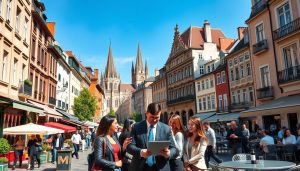
Expanding your business into Croatia can feel both familiar and exciting. It’s a gateway to Central, Eastern, and Southeastern Europe. Here, you’ll find clear rules, improving infrastructure, and strong ties to the EU.
The market in Croatia is unique. With a population under four million, it’s not about big numbers. It’s about speed and fitting in well. Many people and businesses here adopt new technology quickly.
This makes Croatia a great place to test your product, check prices, and refine your plan before scaling up.
So, where are the best opportunities? The strongest ones are in tourism, ICT, energy, agriculture, food, automotive, pharmaceuticals, and related services. In this guide, we’ll explore business ideas in Croatia that meet real demand and the practicalities of daily operations.
If you’re thinking of starting a business in Croatia, we’re here to help. We’ll guide you from idea to compliant launch. We support with formation, documentation, and ongoing administration. We also work with experienced Immigration advisers for relocation or business travel.
Introduction to the Croatian Business Landscape
UK founders looking to expand might find Croatia appealing. It offers a mix of stability and growth potential. Croatia is at the heart of Central Europe and the Adriatic, with modern infrastructure and a growing business culture.
Thanks to EU single market rules, trading, hiring, and moving services are easier. This is compared to non-EU markets.
Overview of Economic Climate
The Croatian economy is expected to grow steadily. In 2023, real GDP increased by 3.1%. This was due to increased household and government spending, investment, and exports.
Employment is rising, and unemployment is at a low. This suggests a strong labour market.
For 2024 and 2025, Croatia’s GDP is forecast to grow by 3.3% and 2.9% respectively. Inflation is expected to decrease, and government debt will continue to fall. This environment is good for planning, pricing, and investing in the future.
The Role of Tourism in Business
Tourism has a big impact on Croatia’s economy, affecting many sectors. It’s responsible for nearly 20% of the country’s GDP. Seasonality affects staffing and stock levels, but easier travel rules have boosted visitor numbers.
New tourism laws and proposals could change the short-term rental market. This includes possible limits on rentals and stricter building rules. These changes are important for businesses and investors to consider.
Start-up Ecosystem in Croatia
The start-up scene in Croatia is growing, thanks to grants and EU investment. Since 2016, over 49,000 people have started businesses, receiving over €451.8 million in support. Grants can be up to €24.5 million for businesses.
In the first half of 2025, 2,687 people used these grants. This support helps with skills, equipment, and hiring. Being part of the EU single market also helps start-ups expand beyond Croatia.
Top Business Ideas Driven by Tourism
Tourism is changing across the country. For UK founders looking at Croatia, it’s key to balance peak-season demand with steady income all year. Easy Schengen travel boosts short trips, which can increase bookings and spending.
Hospitality Industry Opportunities
Hospitality can still thrive, but it needs quality and efficient operations. Investing in Croatia’s hospitality now requires careful planning for compliance, not just a strong brand and location. The Tourism Law from December 2023 and proposed 2024 changes might change how places are approved and managed.
Some places might limit the number or type of accommodations. This could affect a business model based on quick growth. New rules might also require hosts in residential buildings to get consent from most neighbours or co-owners. Existing hosts could have five years to get consent, along with new licensing rules, making early planning crucial.
Check local policies before committing to a lease or purchase.
Include compliance planning in your pricing, staffing, and renovation plans.
Test your returns under new unit limits, consent rules, and seasonal changes.
Local Food and Drink Ventures
More visitors mean more everyday spending, from quick lunches to fancy dinners. This boosts Croatia’s food and drink businesses, as the country imports over $3 billion in food products. With strong tourism on the coast and recovering city demand, supermarkets also see steady spending.
Competition is fierce, but the market is deep. Big names like Lactalis and Heineken are already here, and brands like Kraš and Ledo export well. With 57,000+ employees and 3,400+ companies, the sector has scale, logistics, and supply chains.
Focus on high-margin items like premium deli goods or specialities.
Plan for labelling, cold-chain handling, and traceability from the start.
Use seasonal menus and local ingredients to keep costs steady.
Tour Guide Services
Experience-based services can be a flexible entry into tourism in Croatia. With lower costs than accommodation, they offer a chance to test demand before big investments. Schengen access makes city breaks and multi-stop trips easier, fitting walking tours, heritage days, and food routes.
Peak-season limits and price competition in services exports are factors. Differentiation is key: focus on specialist culture, archaeology, island-hopping, or craft and cuisine trails. For many ideas, scheduling, permits, and supplier agreements are as important as the story you tell.
Technology Start-ups and Innovations
UK founders looking to move should consider Croatia’s tech start-ups. They are known for their speed and talent. The local market is open in key areas, allowing new teams to quickly win work.
Also, digital habits are strong here. About 75% of people use the internet, and 97% of 16–24 year-olds have good digital skills.
Connectivity supports growth, but it varies by region. Broadband coverage is around 86% nationally and 39% in rural areas. This mix creates a need for scalable platforms and reliable support.
IT Services and Software Development
ICT services make up about 70% of the Croatian ICT market. Equipment sales and production make up the rest. This imbalance shows a steady demand for IT services in Croatia.
Projects often involve cloud computing, ERP, CRM, IoT, and website rebuilds. This is due to the need for scalable platforms and reliable support.
Croatian software development has proven its worth. Companies like Infobip and Infinum have shown growth. They have even been featured on Financial Times and Deloitte lists. This makes outsourcing or building nearshore teams less risky for buyers.
E-commerce Platforms
Buying habits and business tools are improving for e-commerce in Croatia. Internet usage is close to the EU average. Companies are adopting advanced systems like cloud solutions and e-invoices.
Tourism adds a seasonal edge to demand. It boosts bookings, local delivery, and multilingual storefronts. It also increases supermarket growth due to imported food.
Cybersecurity Solutions
Security is now a must-have, not just a nice feature. The market is moving towards detection and response. Croatia is building its cybersecurity capabilities, including the Military Cyber Command Centre in Zagreb.
The Security and Intelligence Agency (SOA) has also developed the Cyber Technology Center. This protects over 60 key government and critical infrastructure organisations. Regulation is adding urgency, with clearer requirements and tighter incident reporting.
Sustainable and Eco-friendly Businesses
Founders looking for steady demand and long-term value in Croatia have many options. The country’s green shift is creating opportunities in power generation, food supply, and resource recovery. This is thanks to EU funding, national strategy, and local needs.
Renewable Energy Initiatives
Renewable energy in Croatia already makes up 31.33% of the energy balance. Most of this comes from large hydroelectric power. Yet, the country still imports 54.54% of its energy, including 74.48% of natural gas and 78.34% of oil.
The Energy Strategy of 2020 aims to increase renewables. It plans for renewables to be 36.4% of total energy by 2030 and 65.6% by 2050. Upgrading the grid is key to achieving these goals.
About $1.4 billion will be invested in grid modernisation. This aims to add at least 800 MW of new renewable connections by 2026 and 2,500 MW by 2030. This could lead to work in various areas like permitting, construction, and monitoring.
- For PV developers, Croatia’s strong irradiation makes it ideal for solar power. The installed PV capacity per capita is low, offering growth opportunities.
- For those with marine and port capabilities, wind projects in Croatia are promising. There’s an EU-funded study for a 300 MW offshore wind farm in the northern Adriatic.
- For heat and baseload solutions, geothermal in Croatia’s Pannonian Basin is promising. The geothermal gradient is higher than the European average, with six exploration projects underway.
Organic Farming and Produce
In food, sustainable agriculture in Croatia aligns with natural resources and import substitution demand. The country has 1.5 million hectares of agricultural land and 2.8 million hectares of forests. This supports diversified production and value-added processing.
The imported food market in Croatia is over $3 billion. This creates space for premium, organic, and traceable goods, mainly in tourism-heavy areas. Producers need to offer consistent volumes, clear provenance, and short lead times to hotels, restaurants, and retailers.
Local self-sufficiency in staples like wheat, corn, and fruit supports blended models. These combine core crops with higher-margin lines such as organic oils and dried fruit.
Recycling and Waste Management
Waste and circular-economy services fit well with the infrastructure push for renewable energy in Croatia. EU-backed upgrades and national targets are improving sorting, collection quality, and compliance.
There’s room for specialist operators in recycling, packaging recovery, and regulated waste handling. These services also connect to smart city programmes, where better sensors and routing can cut costs and improve capture rates.
Creative Industries: Opportunities in Arts and Media
UK founders have a great chance to enter Europe through creative industries in Croatia. This field is booming where culture, hospitality, and tech meet. It demands careful planning and quick action.
The tourism sector keeps the demand for content high. Thanks to better internet and EU funding, it’s easier to work with teams remotely. This makes managing projects smoother.
Film and Television Production
Croatia’s stunning coastlines and historic streets are perfect for filming. They offer beautiful locations without the need for expensive set builds. This makes it ideal for film and TV production, from ads to full-length shows.
Hotels and tourism partners are also creating content for their campaigns. This links film work to promoting tourism in Croatia. It leads to more work for crews and local experts.
Graphic Design and Branding
With more eco-friendly hotels, there’s a need for unique branding. Policies favouring family and heritage hotels mean businesses must stand out. They need to offer more than just a place to stay.
Branding services in Croatia can grow by offering a range of services. This includes naming, visual identity, and creating guidelines for print and digital use.
Digital Marketing Services
Digital marketing is thriving in Croatia, thanks to high internet use and strong digital skills among young people. Many businesses are adopting cloud services and AI for better reporting and automation.
For those facing price competition, digital marketing focuses on converting visitors into customers. It aims for measurable results and efficient funnels.
Search and paid media that protects margin during peak season
Analytics and dashboards that link bookings to spend
Content and social plans designed for tourism marketing Croatia across key source markets
Health and Wellness Ventures
Health spending in Croatia is on the rise, and it’s not just about hospitals. Gyms, clinics, and food brands are also seeing more demand. This is thanks to higher incomes in cities, more visitors to the coast, and a focus on staying healthy.
Fitness Centres and Gyms
Fitness is more effective when it’s part of a broader wellbeing package. In Zagreb, steady membership works well. Coastal towns, on the other hand, benefit from seasonal peaks and short-term passes linked to hotels.
There’s also a chance to combine fitness with care, like recovery training and mobility coaching. With Croatia’s e-health system ready for digital services, businesses can streamline their operations. This ensures a consistent service for customers.
Wellness Tourism
More people are looking for private healthcare options because public services can be slow. This demand is driving growth in private healthcare and medical tourism in Croatia. It’s mainly for services where results are clear and time is of the essence.
Popular services include dental care, rehabilitation, orthopaedics, dermatology, and aesthetic surgery. Wellness tourism adds to this by offering longer stays for spa treatments, physiotherapy, stress recovery, and sleep packages.
Croatia’s EU membership makes it easier for EU-registered health and pharmaceutical products to enter the market. This is good news for businesses looking for standardised supplies and reliable sources.
Health Food Products
Health food is a promising area because Croatia imports a lot of its food. Tourism boosts sales in peak months. Founders can focus on creating functional snacks, organic products, and premium local items that appeal to visitors and city dwellers.
The food industry in Croatia is large, with over 57,000 employees and 3,400 companies. Big international brands like Nestlé and Coca-Cola are already here. This provides a benchmark for quality and labelling for new businesses.
Real Estate and Property Management
Many UK founders see Croatia as a good place to invest in property. The demand for rentals goes up with the seasons and stays strong in top coastal spots. But, it’s key to plan for rules, money flow, and daily tasks from the start. The best results come from treating tourism real estate as a full-time business.
Short-term Rental Services
Short-term rentals can do well, but the rules in Croatia are changing. The Tourism Law of December 2023 lets towns control the number and types of rentals. This is to ease overcrowding and help with long-term housing.
For 2024, there’s a new rule for flats in shared buildings. A new Building Management Act will need hosts to get permission from most neighbours. The Hospitality Act will link short-let licences to this permission, giving existing hosts five years to adjust.
Check local rules early, not after you buy, as limits can differ by town.
Consider building rules, neighbour votes, and noise laws when planning.
Have clear rules for guests, as their experience and following the law are now linked.
Property Development
Now, there’s a push for green hotels and projects that respect heritage. This fits with tourism policies and can please lenders and locals. It also helps with longer seasons and more stable staff.
Activity is growing slowly as EU funds are used better and loans become easier. For tourism real estate in Croatia, this means more updates, better facilities, and higher demand in well-managed areas.
Real Estate Agencies
A good real estate agency in Croatia can make things smoother. Local rules can vary, even if national laws are the same. This is where knowing the local scene and property management are crucial.
Local checks and property management go together, from paperwork to handover. As digital services improve, these differences are getting smaller. But, they still affect timing and risk in deals.
For investing in Croatia, picking the right agency is important. Look for local knowledge, clear documents, and a solid plan for running the property under the current laws.
Agriculture and Agribusiness Opportunities
Founders looking beyond the coast can find success in agribusiness Croatia. The country has 1.5 million hectares of farmland and 2.8 million hectares of forests. These resources support mixed production and local supply chains.
When evaluating Croatian agriculture land, we consider several factors. These include location, irrigation, access roads, and storage. Soil quality is also important.
Traditional Croatian Farming
Traditional farming is still important for planning. Croatia is mostly self-sufficient in staples like wheat, corn, oats, and barley. It also produces a lot of fruit, including mandarins and cherries.
The real opportunity lies in value-added foods. The market for imported products is large. This creates a gap for UK-based operators to fill with processing, packaging, and distribution.
Agritourism
Tourism on the Adriatic Coast boosts demand for food. Agritourism Croatia links coastal demand with inland supply. This offers visitors farm experiences while still enjoying beaches and cities.
Agritourism can include tastings, farm shops, and small-batch products. This model helps smooth out seasonality. Farms can sell to restaurants in peak months and to retail or direct customers outside the summer rush.
Sustainable Agriculture Practices
Buyers now expect traceability, lower inputs, and clear welfare standards. Sustainable farming Croatia is a commercial advantage. It can also reduce costs when fertiliser and energy prices rise.
Sustainable farming includes drip irrigation and integrated pest management. It also involves composting and smarter cold-chain handling. The food ecosystem in Croatia is already active, with big names like Lactalis and Heineken.
Primary production on Croatian agriculture land paired with local aggregation and storage
Processing and private-label supply for retailers and hotels, positioned within agribusiness Croatia
Experience-led farm offerings that tie inland output to coastal footfall through agritourism Croatia
Education and Training Services
Starting an education business in Croatia is a smart move for UK companies looking to grow in the EU. There’s a big need for training that boosts communication, compliance, and sales skills. This also helps in developing the workforce in Croatia as companies compete for skilled staff.
With easier travel and strong trade links, training is a top priority for businesses. The best training focuses on real-world tasks, not just theory. This makes professional education in Croatia a daily benefit.
Language Schools
Language schools can cater to both tourism and business needs. Short, focused courses are great for teams that deal with customers. This helps HR plan for workforce development in Croatia.
- Business English for meetings, bids, and reporting
- Croatian for relocating staff and on-site operations
- Sector vocabulary for tourism, logistics, and healthcare
Professional Training and Workshops
The job market is competitive, so employers want training that boosts productivity quickly. Training and education are seen as key assets in national planning. Good training in Croatia can lead to safer work, better delivery, and higher staff retention.
Workshops fit well with sectors that attract investment, like ICT, energy, and tourism. Courses that improve digital skills, project delivery, and compliance are popular with clients.
- Role-based workshops with clear outcomes and assessments
- Short formats that reduce time away from operations
- Blended delivery that fits shift patterns and peak seasons
Online Course Platforms
Online learning is growing in Croatia, thanks to a strong digital base. Around 75% of people use the internet, and broadband is widespread. Young people in Croatia have excellent digital skills, making online training a good option for firms.
The government focuses on digital skills and jobs, and businesses are adopting new technologies. Providers that offer concise modules, good support, and measurable skills gains can make a big impact in Croatia.
The Rise of Remote Work Solutions
Remote work has become a key way to grow teams across borders. For UK founders, Croatia offers strong internet, a skilled workforce, and growing support for modern businesses.
Croatia is becoming a solid base for digital nomads, not just short visits. This mix of stability and flexibility is driving demand for remote work solutions in services, tech, and admin.
Co-working Spaces
Co-working is growing with ICT advancements and the adoption of hybrid work. Croatia boasts high 4G coverage and is fully allocated for 5G spectrum, ensuring 5G availability everywhere.
Co-working in Zagreb is ideal for meetings, calls, and project work. The city and north-west are economic hubs, offering talent and specialist support when needed.
- Flexible desks and private offices for short sprints or long leases
- Reliable connectivity for video calls, cloud tools, and secure logins
- Community events that help teams hire, partner, and test ideas
Virtual Assistant Services
As businesses grow, tasks like admin, invoicing, and customer queries pile up. Virtual assistants fill this gap well, complementing business services in Croatia.
Croatia is digitising, but the business environment can be complex. Bureaucracy is often complicated and unclear. We plan carefully and recommend expert advice in law and taxes, as regional practices can vary.
- Back-office support: scheduling, document handling, and client follow-ups
- Operational support: supplier coordination and basic reporting
- Process support: tidying workflows so remote teams stay consistent
Freelance Platforms
Freelance platforms leverage everyday internet habits like reading, video calls, and gaming. This supports a strong digital skills base, helping teams work across time zones efficiently.
This creates a dual opportunity for founders: Croatia as a market and talent pool for EU-wide delivery. UK teams can access design, development, testing, or content support from Croatia, enhancing their operations without heavy costs.
- Project-based hiring for developers, designers, and analysts
- Short contracts to cover peaks in demand or product launches
- Remote collaboration that suits digital nomads Croatia and distributed teams
Retail Business Ideas for Local Markets
Starting a retail business in Croatia works best when it matches local habits and cash flow. Places with lots of tourists have busy days, while locals keep sales steady all year.
It’s important to understand how demand changes in different areas and seasons. Coastal towns can get very busy, while cities help keep sales steady even in winter.
Artisan Crafts and Products
Tourism is a big part of Croatia’s economy, making premium gifts popular. Small, unique items do well when they have a good story and simple prices.
For artisan products, success comes from:
- Compact items that travel well, with protective packaging
- Clear provenance, materials, and care notes
- Limited runs that support higher margins without heavy volume
Boutique Shops
With rising wages, people are spending more, helping boutique shops in key areas. Zagreb and the north-west offer steady trade, while the Adriatic Coast sees big spikes in summer.
In boutique shops, we match stock to local spending and tourist peaks. This way, cash flows smoothly and we can keep up with changing tastes.
Online Retail
Online shopping in Croatia is growing fast, thanks to widespread internet use. Many businesses now use cloud tools and e-invoicing for easier operations.
Online shopping helps balance out busy periods, like tourist seasons. It also gives us better data on what customers want, helping us restock faster and avoid waste.
Logistics and Transportation Services
For UK founders aiming to grow in the Adriatic, logistics in Croatia is key. It affects customer happiness, cash flow, and stock levels. The best results come from smart planning and local expertise in transport services Croatia.
As more goods move, the top performers focus on quick delivery, fewer failed deliveries, and managing fuel costs. With oil prices up, choosing the right routes, planning loads, and managing fleets is crucial every day.
Delivery Services
E-commerce growth means faster and more tracked deliveries are needed. This demand is high in busy cities and coastal areas. Here, reliable delivery times boost sales and repeat business.
At the final stage, last-mile delivery in Croatia needs careful handling. Reducing empty miles, improving address accuracy, and better scanning can help. These steps also help during busy times.
Freight and Shipping Solutions
Trade with the EU is big for Croatia, with over half of its trade with EU countries. Key partners include Italy, Germany, and others. This makes lane planning and choosing carriers easier.
For UK businesses shipping to the EU, Croatia’s role in the EU customs area helps. We focus on practical steps like using the right codes and planning ahead. This keeps transport services in Croatia reliable as volumes grow.
Ride-sharing Platforms
Ride-sharing demand follows tourism and urban spending, near airports and events. With good 4G coverage and EU digital efforts, apps work well across most areas.
But, costs must be realistic. Rising energy prices, including from the Ukraine war, affect driver and rider costs. We monitor how well services are used, surge pricing, and service areas. This ensures reliable service without hurting profits.
Financial Services and Consulting
For UK founders, Croatia might seem attractive. But, it’s crucial to make sure the numbers add up. We assist in setting up tax, compliance, and growth strategies. This way, your move is practical, not just a dream.
With Croatia’s tax incentives and clearer rules, the right support can ease your transition. It makes starting your business smoother from the get-go.
Tax and Accounting Firms
Tax and payroll can be overwhelming, with different rules in each region. That’s why good bookkeeping, VAT handling, and payroll reporting are key. We also consider Croatia’s double taxation agreements to help with planning dividends, salaries, and payments across borders.
Croatia’s EU single customs area simplifies goods movement. Yet, it doesn’t eliminate local compliance duties. Reliable accounting support ensures consistent filings and protects your cash flow during busy periods.
Business Consultancy Services
Operating in Croatia can be challenging. You might face complex bureaucracy, higher costs, and a judiciary with backlogs. Business consulting in Croatia helps by streamlining processes, documenting everything, and making clear decisions.
There’s also progress. Digitalisation and better administrative connections have reduced interpretation gaps. This makes market entry consulting in Croatia more effective with strong local support.
Investment Advice
Investor interest in Croatia is not new. The country has seen €45.22 billion in foreign direct investment since 1993, with 10.77% from Germany. The 2024 AHK survey showed almost 90% of members would reinvest, based on 118 companies.
We use investment advisory in Croatia to help you understand the investment landscape. EU funds, the Recovery and Resilience Facility, and the National Recovery and Resilience Plan shape demand in key sectors. Good planning links funding, sector data, and realistic timelines before investing.
Food and Beverage Industry Trends
In coastal cities, the food and beverage scene is influenced by local supplies and tourist seasons. UK founders wonder: can we meet Croatia’s food demand without sacrificing quality or profit?
Big names like Heineken, Carlsberg, and Coca-Cola dominate the beverage market. Croatia’s food sector is also robust, with over 57,000 employees and 3,400 companies. This ensures reliable supplies and distribution.
Craft Brewery Start-ups
Craft beer in Croatia benefits from tourism, notably along the Dalmatian coast. Here, customers prefer fresh, locally sourced, and small-batch beers over mass-produced ones.
For new breweries, focusing on quality and efficient procurement is key. This is crucial during peak seasons when resources can be stretched thin.
Cafe and Bistro Concepts
Cafés in Croatia are popular among locals and tourists, with demand throughout the day. Rising wages and household spending boost weekday sales, while tourism boosts weekends.
In summer, managing staff and ingredients is vital for success. We plan for flexibility, supplier backups, and menus that stay profitable despite price changes.
Morning focus: espresso, bakery lines, and fast table turns.
All-day value: simple bistro plates that travel well from kitchen to table.
Season readiness: pre-booked suppliers and clear portion control.
Food Trucks
Street food in Croatia is perfect for entrepreneurs who value mobility and lower costs. Food trucks can adapt to demand by moving to different locations as the season changes.
With over $3 billion in imported food products, supermarkets are expanding. This means food trucks can find a steady supply of ingredients and operate beyond the peak tourist season.
Menu design: limited SKUs, fast service, and strong holding quality.
Compliance: hygiene processes, waste handling, and clear labelling.
Location strategy: permits, event calendars, and weather planning.
The Benefits of Setting Up a Business in Croatia
For UK founders thinking about mainland Europe, Croatia offers clarity, reach, and cost-effectiveness. The investment climate has grown, with better rules and more international players. This makes planning easier, with clear rules and reliable partners.
Government Incentives for Start-ups
The national self-employment support programme is a key incentive. Since 2016, over 49,000 people have benefited, with over €451.8 million given out. It offers up to €7,000 for certain trades and up to €15,000 for others.
In early 2025, €24.5 million was given out, showing ongoing demand. The programme is funded by the EU and Croatia’s recovery plan. The most active sectors are construction, personal services, and professional fields.
Networking Opportunities
Networking is crucial for hiring, sourcing, and winning contracts. The German-Croatian Chamber shows almost 90% of members would invest again. This confidence suggests active supply chains and repeat business.
Global brands in food, beverage, and pharmaceuticals operate here. This attracts logistics, packaging, and professional services. Newcomers can quickly meet advisers, distributors, and experienced staff, keeping an eye on the investment climate.
Access to European Markets
EU market access in Croatia is a real advantage. Being an EU member means harmonised laws, reducing trade barriers. This includes easier placement of medical and pharmaceutical products.
Since joining Schengen in March 2023, travel for meetings has become easier. Over half of Croatia’s trade is with EU countries, mainly Italy, Germany, and Slovenia. This makes it easier for UK firms to build European distribution networks.
How Start Company Formations Can Help
Expanding to Croatia from the UK might seem simple, but it can be slow. We make the process clear and focus on the details. With Start Company Formations, you get practical steps and support for company formation in Croatia.
Company Registration Services
Starting with Croatia company registration means picking the right structure. We help you choose based on your business model and tax needs. We prepare the necessary documents to help you move forward quickly.
When things get complex, we keep track of all decisions and submissions. This ensures legal compliance in Croatia from the start.
- Structure selection aligned with your sector and risk profile
- Document preparation and filing coordination for Croatia company registration
- Clear checklists to support legal compliance Croatia across each step
Legal and Financial Advice
In Croatia, thorough due diligence is crucial. Court delays and unclear procedures can lead to costly mistakes. We set clear expectations and offer expert advice on tax and legal setup.
We also help you understand the benefits, like tax incentives and double taxation agreements. This is where our support really makes a difference, as it affects your contracts and cash flow.
Ongoing Business Support
Rules in Croatia can change quickly, affecting tourism and property. We keep you updated on changes like Tourism Law 2023. We also help with growing compliance areas like cybersecurity.
- Operational support to keep filings, governance, and records consistent
- Introductions to business immigration advisers, working alongside experienced Immigration advisers to discuss your case
- Specialist licensing support, including Gaming Licences and FX & Crypto Licensing Companies
Conclusion: Seizing the Opportunities in Croatia
Croatia is showing clear, data-led momentum. GDP grew by 3.1% in 2023, with forecasts of 3.3% in 2024 and 2.9% in 2025. EU-backed investment and tourism, at close to 20% of GDP, keep demand moving. For Expanding your business into Croatia, that mix can reduce risk and improve planning.
These Croatia market opportunities also sit in specific lanes. We see Croatia growth sectors gaining pace in ICT, where adoption is fast and many niches remain unsaturated. Energy is moving through grid modernisation and renewables targets. Healthcare demand is rising due to waiting lists and medical tourism, while agrifood offers room in a large import market alongside established industrial players.
If you want to start a company in Croatia, we suggest treating the country as a practical EU testbed. It is small, but tech-forward, and it rewards firms that prepare well. What should you watch for? Regional differences in how rules are applied, complex administration, and changing tourism or property requirements.
We help UK business owners turn this into a clear route to market, with local compliance built in from day one. For Start Company Formations contact and a tailored launch plan, speak with us on 0204 504 1544. We will map your best setup path for Expanding your business into Croatia and support you as you start a company in Croatia.