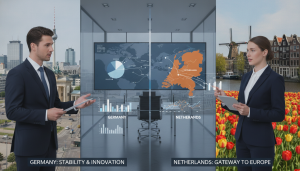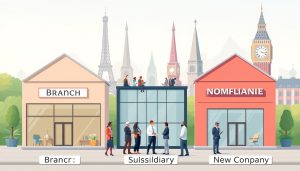
Choosing between Germany and the Netherlands involves more than tax rates or set-up costs. Your base should match where you manage the business, employ people and serve customers.
For a Germany Netherlands Business, genuine activity matters. Germany offers direct access to the EU’s largest economy. It may suit businesses whose sales teams, operations or clients are based there.
The Netherlands may suit a regional headquarters, an intellectual property business or a European holding structure. However, a Dutch company needs real Dutch substance, including management and decision-making, to support its position.
When assessing a Germany vs Netherlands company, we look at your commercial plan before discussing the legal structure. This approach helps reduce tax risks and gives your international business expansion a sound foundation.
Start Company Formations supports European company formation with clear, practical guidance. Call us on 0204 504 1544 to discuss your circumstances with our team.
Germany Netherlands Business: Key Differences for International Founders
Our Germany Netherlands Business comparison starts with where your team works, meets clients, and makes key decisions. EU incorporation can support growth, but your company form should match daily operations.
When Germany is the stronger operational base
Germany often suits firms that mainly sell, hire, or deliver services in Germany. A German GmbH is familiar to local banks, landlords, public bodies, and business customers. This can make German market entry feel more direct and credible.
Before guiding founders, we consider practical points:
- Where directors manage the business
- Where employees perform their work
- Where customers receive the service
When the Netherlands suits an international structure
A Dutch BV can suit a regional group, intellectual property holding, or English-language trading operation. The Dutch business structure is widely used by companies managing activities across several European markets.
It may offer a clear framework for overseas shareholders, but paperwork alone does not create a Dutch operational base. Management, staff, and commercial functions still need a genuine connection to the Netherlands.
Why the location of real business activity matters most
Germany, the Netherlands, and Estonia are often compared by international founders. Yet a company registered outside Germany may still face German tax, payroll, and compliance duties when real activity remains there.
We assess substance before recommending a route. Tax treatment and treaty access usually depend on effective management and economic activity, not simply the address on incorporation documents.
German GmbH vs Dutch BV: Company Structure Comparison
Choosing between a German GmbH and a Dutch BV affects ownership, management and how customers see your business. Both offer limited liability, but their formation rules and daily governance differ.
GmbH features, credibility and limited liability
A German GmbH is Germany’s most common private company form. It separates company debts from shareholders’ personal assets, subject to proper management and legal duties.
Its articles are usually notarised in a Gesellschaftsvertrag. In simpler cases, founders may use a Musterprotokoll. This structure can build commercial credibility with German suppliers, banks and corporate clients.
BV flexibility under the Dutch Flex BV framework
A Dutch BV is a private limited company with flexible ownership and governance. The Flex BV rules, introduced in 2012, removed the former €18,000 minimum capital requirement.
A limited liability company Europe option can help founders preserve cash for trading, staff or product development. The articles can also set tailored voting rights and share arrangements.
Governance, shareholders and director requirements
In a GmbH vs BV review, shareholders should look beyond capital. Director powers, local management, reporting duties and decision-making procedures can affect tax risk and business control.
- Shareholders must be recorded accurately and beneficial owners must be registered.
- Directors must act in the company’s interests and maintain proper records.
- Tax registrations, accounts and ongoing compliance are required in both countries.
We help you assess shareholder agreements, director duties and where real management will take place. This supports a structure that fits the market in which you plan to trade.
Minimum Share Capital and Start-Up Funding Requirements
Capital rules affect cash planning from day one. We help founders match business start-up funding with the company type, banking process and early operating needs.
German GmbH share capital of €25,000 and the €12,500 paid-in requirement
A German GmbH requires GmbH share capital of €25,000. Before registration in the Handelsregister, at least half must be paid into the company bank account.
The €12,500 GmbH deposit must be confirmed by the bank. The remaining €12,500 is still owed to the company, but need not be paid at formation.
This money is not a state charge. After registration, it becomes a company asset and can support genuine business costs.
- Office rent and equipment
- Professional fees and insurance
- Stock, software and marketing
Dutch BV capital requirements from €0.01
The Dutch BV minimum capital can be as little as €0.01. No rule requires capital to be deposited with a bank before the BV is registered.
Many founders still choose to contribute €100 or more. A sensible amount can cover early invoices and show enough working capital for planned business activity.
Using company capital for legitimate operating costs after incorporation
After incorporation, capital may fund lawful company expenses instead of staying untouched in the account. Payments should support the business and be recorded clearly in the accounts.
We consider your funding plan alongside tax, banking and operational needs. This helps you prepare for practical costs that arise when trading begins.
Company Formation Process in Germany and the Netherlands
We help founders plan every step before they sign documents. Both routes need formal checks, but their order, language and timing can differ. A clear plan can reduce delays and help you prepare for banking, tax and compliance duties.
Notarial incorporation, commercial registration and tax registration in Germany
The GmbH formation process begins with a notarial deed. Founders then open a company bank account and deposit the required share capital. Once documents and bank evidence are ready, the managing director applies for Handelsregister registration.
After entry, the company must register its beneficial owners with the Transparenzregister. Tax registration with the Finanzamt and trade registration with the Gewerbeamt may also be required. Since 2022, some standard cases have used video notarisation, but it may not suit every structure.
Setting up a Dutch BV through a civil-law notary and the KVK
Dutch BV incorporation requires a deed from a Dutch civil-law notary. The notary can often support foreign shareholders and directors, and English is commonly used during the legal process. The company then enters the Kamer van Koophandel.
KVK registration gives the BV its place in the Dutch trade register. The business must also arrange tax registration and keep proper records from the start. We can help prepare ownership details, director information and supporting documents before the appointment.
Typical formation timelines for foreign founders
A standard German GmbH commonly takes four to eight weeks. Bank onboarding, document legalisation and cross-border checks can extend the timetable. Handelsregister registration is a key stage, so complete filings matter.
A Dutch BV often takes two to four weeks when documents are ready and due diligence is straightforward. KVK registration may move quickly, but founders should allow time for bank account approval and tax setup. We coordinate the process, so you can focus on launching your European operations.
Corporate Tax Rates in Germany vs the Netherlands
Tax costs can affect cash flow, prices and where key decisions are made. We help founders compare the Germany corporate tax rate and Netherlands corporation tax before trading starts.
Income tax, surcharge and local trade tax in Germany
German companies pay 15 per cent corporate income tax, called Körperschaftsteuer. A solidarity surcharge of 5.5 per cent applies to this tax.
Each municipality sets German trade tax. In major cities, it often adds 14 to 17 per cent, bringing the total near 29 to 31 per cent. Standard VAT is 19 per cent, and companies usually make quarterly prepayments.
Dutch rates for lower and higher profits
Netherlands corporation tax is 19 per cent on profits up to €200,000. Profits above this level face a 25.8 per cent rate. This split can matter when annual income grows unevenly.
Retained profits and dividend planning
Review Dutch BV taxation alongside dividend payments, shareholder residence and cross-border income. Retained profits may support hiring or expansion, while distributions can create further tax obligations.
- Expected annual profit and cash needs
- Local management and business substance
- Dividend withholding and treaty positions
We recommend specialist advice in each relevant jurisdiction before funds are retained or paid to shareholders.
Dutch Innovation Box and German Tax Incentives for Growing Companies
Tax incentives can influence where a growing company develops, owns and manages valuable assets. For UK founders expanding into Europe, the right structure depends on real activity, not only a lower rate.
The 9% rate for qualifying intellectual property
The Dutch innovation box may apply a 9% intellectual property tax rate to qualifying profits from self-developed IP. This can cover patented technology, software and certain innovation assets linked to eligible research work.
Profit must connect to the qualifying asset and be supported by clear records. The Dutch innovation box is not a general tax reduction for all business income.
When a Dutch BV may support innovation growth
A Dutch IP company may suit a business that owns technology, receives cross-border royalties, or manages European research teams. It can also support a regional headquarters model, with management and development based in the Netherlands.
A technology business Netherlands structure needs genuine local substance. This may involve Dutch-based directors, employees, decision-making, and commercial risk within the BV.
Why specialist advice matters before implementation
German research incentives may also help companies conducting eligible research and development. The best route depends on where your people work, where the IP is created, and how profits are allocated.
We recommend specialist tax advice before relying on an IP regime. Eligibility rules, anti-abuse measures, and transfer-pricing methods can affect the available treatment.
European Market Access and Customer Credibility
Market presence can influence how buyers view a new European business. We help match your company location with customers, sector rules, supply chains and your team’s working location.
A large domestic market with strong buying power
Germany market access brings your business closer to around 84 million consumers. As the EU largest economy, Germany offers demand in machinery, automotive, chemicals, finance and technology.
For firms selling industrial goods or specialist services, local knowledge can support stronger sales discussions. It may also help when customers expect German-language contracts, invoicing or support.
Meeting procurement and compliance expectations
German B2B procurement often includes detailed supplier checks, formal tenders and clear compliance records. A German entity may support contract bids in regulated sectors, including manufacturing, energy and financial services.
- Local invoicing and VAT administration
- Clear director and ownership records
- Contract terms suited to German customers
A connected base for trade and regional teams
Netherlands European headquarters can suit businesses that value English-language operations and direct access to European trade routes. Amsterdam supports technology and finance, while Rotterdam remains a major logistics gateway.
We assess customer expectations alongside the real locations of management, staff and service delivery. This helps you choose a structure that supports trading plans without creating an artificial presence.
Business Substance Requirements and Permanent Establishment Risk
A registered address forms only one part of a company’s tax position. Dutch substance requirements and cross-border tax compliance depend on where people work, make decisions, and conduct real business activity.
Genuine management and decision-making in the Netherlands
A Dutch BV should show real activity in the Netherlands, especially when seeking treaty relief or operating as a holding company. This may include qualified local directors, Dutch-based employees, board meetings, and clear records of key decisions.
- Management decisions made in the Netherlands
- Local staff, premises or meaningful holding functions
- Business records that support the company’s Dutch role
Dutch anti-abuse rules and ATAD measures may bring letterbox structures under close review. The effective place of management must match real business operations, rather than the company’s corporate documents.
Operating from Germany and permanent establishment exposure
A German permanent establishment may arise if the company has a fixed business location in Germany. It may also result from employees working there or a dependent agent regularly signing contracts.
For example, a founder living in Berlin may meet clients there and direct a Dutch BV from Germany. This may create German tax exposure. Daily control and contract approval can matter as much as the company’s registered address.
A registered office is not the full tax answer
A registered office alone does not decide where profits are taxed. Tax authorities may examine strategic control, commercial risk, and the location of core operations.
We help founders assess their structure before operations begin, with qualified advice on cross-border tax compliance. Where relocation or residence plans affect the business, we work with experienced Immigration advisers to discuss your case.
Holding Companies, Dividends and Tax Treaty Networks
A Dutch BV can support a clear group structure for ownership, funding and intellectual property. UK founders expanding into Europe should match the structure to where key decisions are made.
Qualifying income from subsidiaries
The Dutch participation exemption may remove qualifying dividends and capital gains from subsidiaries from Dutch corporation tax. It can help a Dutch BV holding a meaningful stake in an active subsidiary, rather than a passive shell.
Eligibility depends on the shareholding, the subsidiary’s activities and applicable anti-abuse rules. We encourage founders to review these facts before relying on the treatment.
A practical European group structure
A European holding company may hold shares in operating businesses across several countries. It may also own intellectual property and license it to an operational German GmbH when this reflects genuine commercial activity.
Dutch BV dividends can be considered alongside local withholding taxes, group funding and future sale plans. The structure should have a clear business purpose from the outset.
Substance and treaty access
The Netherlands has a broad tax treaty network, but treaty relief is not automatic. Tax authorities may examine beneficial ownership, Dutch-based directors, board decisions and the company’s real function.
Without suitable substance, treaty benefits may be refused, and German interest deductions may face challenge. We work with coordinated legal and tax advisers in Germany, the Netherlands and other relevant countries to assess the position.
Banking, Compliance and Administration for Non-Resident Founders
Opening a company account often takes longer than incorporation. Non-resident founders should prepare early when ownership or trading involves several countries. We help you present clear records from the start.
German corporate bank account checks and onboarding times
A German business bank account may involve detailed checks on shareholders, directors, funding and planned activity. Deutsche Bank and Commerzbank may support foreign-led companies, while Qonto and N26 Business can offer digital routes for eligible businesses.
Onboarding may take four to eight weeks. Enhanced review can apply when the ownership chain, source of funds or country profile needs closer scrutiny.
Dutch banking options for international BV shareholders and directors
A Dutch BV bank account can be sought through ING, ABN AMRO or Rabobank, subject to their client acceptance rules. International shareholders and directors should expect questions about the BV’s purpose, clients and expected payment flows.
Digital finance providers can support some businesses, but their services and account features differ. The best option depends on how the company will trade and where its customers are based.
AML checks, ownership records and ongoing administration
Strong AML compliance starts with accurate documents. Banks may request passports, proof of address, ownership charts, contracts, invoices and evidence of planned company activity.
- Maintain current director and shareholder records.
- Report changes required for beneficial owner registration without delay.
- Keep accounting files, bank statements and supporting documents in order.
We help organise company information and ownership evidence before banking reviews begin. This gives your application a clear, consistent basis and supports ongoing administrative duties.
Hiring Talent in Germany and the Netherlands
Recruitment costs and employment rules should guide your choice of base from the start. We help founders plan payroll, contracts and compliance before their first hire.
Payroll and employee protection in Germany
Hiring employees Germany requires payroll registration, monthly filings and social insurance payments. Employer contributions often add about 20 per cent to gross salary, depending on the role and insurance rates.
Companies must enrol with a Berufsgenossenschaft for statutory accident insurance. The Kündigungsschutzgesetz can make dismissals more formal once a business has more than ten employees. Clear records and sound contracts therefore matter.
Dutch contracts and skilled-worker routes
Dutch employment law also gives staff strong protection. Employers should allow for notice periods, holiday pay and possible severance payments when ending an employment contract.
A highly skilled migrant Netherlands route can help eligible employers recruit specialist staff from outside the EU. Salary thresholds, sponsorship duties and residence conditions need checking before making an offer.
Tax support for incoming specialists
The 30% ruling may reduce taxable pay for eligible employees recruited from abroad. Since 2024, the benefit has changed to a tiered arrangement over its term, rather than a fixed rate throughout.
We recommend confirming the current eligibility tests, salary limits and available rate with a Dutch tax adviser. Do this before adding the package to a recruitment budget.
Visas and Residency Routes for Non-EU Entrepreneurs
Your company location and place of residence should support the same business plan. Non-EU founders need a route that reflects where they manage staff, meet clients and make key decisions.
We work with experienced Immigration advisers to discuss your circumstances, funding and planned business activity before committing to a structure.
Germany’s route for active business owners
A Germany entrepreneur visa usually covers self-employment under the Section 21 Residence Act. It is designed for founders who plan to live in Germany and run a business with a clear local purpose.
Applicants generally need to show economic interest or regional need, secure financing and suitable professional experience. A viable business plan, realistic forecasts and proof of funds can support the application.
The initial self-employed residence permit may last up to three years. The business must remain genuine, active and consistent with the plan given to the authorities.
Dutch options for innovative founders
The Netherlands offers a self-employed residence permit for entrepreneurs whose business benefits the Dutch economy. Applications assess the business idea, the founder’s experience and the venture’s financial basis.
The Netherlands start-up visa is a separate route for innovative businesses. It requires an approved facilitator and usually gives founders one year to develop the venture before another residence application.
Aligning residence with management
Incorporating a Dutch BV while living in Germany and directing the company there can create tax and substance questions. Equally, a German GmbH may be more practical when daily management, customers and operations are based in Germany.
We help you align the company jurisdiction, management location and residency plan. This supports a clearer case for the relevant self-employed residence permit and helps avoid early structural mismatches.
Choosing the Right European Base for Your Company’s Growth Strategy
To choose Germany or Netherlands, consider where your business will operate day to day. Germany may be stronger if you relocate, hire German staff, sell to German B2B clients, or need local credibility. A GmbH needs €25,000 in share capital, with €12,500 paid before registration.
A Dutch BV may suit an international, English-speaking operation with a Dutch headquarters, holding role, or qualifying intellectual property activity. It can begin with €0.01 and may form in two to four weeks. However, lower capital and a quicker process still require genuine management, records, and commercial substance.
Your European growth strategy should also cover tax, banking, licensing, staff, and where directors make key decisions. International company formation works best when the legal structure supports your business’s daily reality, not only its initial cost.
Start Company Formations helps founders assess these practical issues through clear, supportive guidance. We also assist with Gaming Licenses and FX & Crypto Licensing Companies. Call us on 0204 504 1544 to discuss the right base for your expansion plans.
Related posts:
 Starting a Company in Germany and the Netherlands – Top Tips
 Top Reasons to Do Business in Germany
 Expand in Europe: Prime Location in The Netherlands
 Netherlands BV vs UK Ltd: Key Differences Explained
 Germany vs Poland for Manufacturing Businesses in Europe
 Setting Up a Recruitment Agency: UK vs Netherlands vs Poland
 France vs Netherlands: Which Country Is Better for Holding Companies?
 France vs Germany for Expanding Your Business Into Europe
 Netherlands vs Luxembourg for International Trading Companies
 France vs Germany: Which Country Is Better for Starting a Business?