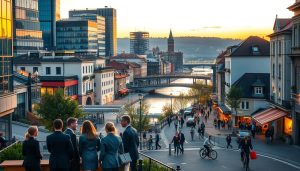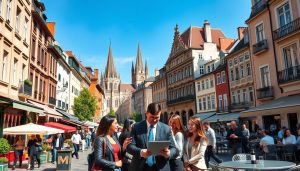
Expanding your business into Slovenia is a smart move for UK owners. It’s not a big leap. Slovenia is at Europe’s heart, with good transport links and digital infrastructure. It’s a great place to serve clients across the region.
Having a local presence makes trading easier. The euro makes pricing clear, and there are no exchange controls. This stability is key for planning, managing cash flow, and paying suppliers.
In this guide, we’ll explore Slovenia business ideas that meet real demand. We focus on e-commerce, renewables, tourism, tech, and professional services. Our aim is to help UK entrepreneurs in Slovenia grow quickly and smoothly.
Setting up a company in Slovenia can be fast if you plan well. But, delays can happen if you wait too long to sort out banking, tax, and reporting. We help you plan the right order to start with confidence.
Start Company Formations supports you from start to early compliance. We also work with Immigration advisers for relocation or staff moves. This ensures your expansion plan stays on track.
Introduction to Slovenia’s Business Landscape
UK founders thinking about an EU base might find Slovenia appealing. It’s a small market with easy access to the wider region. The location, policies, and setup all support growth. Plus, being in the Eurozone makes trade and banking easier.
Slovenia is near Italy, Austria, Croatia, and Hungary. This makes it great for quick visits and reliable delivery. The country’s infrastructure connects ports, motorways, and rail to Central Europe. This makes business travel simpler.
Overview of Slovenia’s Economy
Slovenia joined the EU in 2004 and adopted the euro in 2007. This means it follows European rules closely. The business environment is digital and easy to set up, attracting many owners.
With a population of about 2.1 million, Slovenia is small but efficient. It’s ranked 8th in the 2019 Global Peace Index. This reassures families and teams. Slovenia’s GDP growth has been around 5% in some years, with projections of 2.5–3% annual growth.
Key Industries Driving Growth
Slovenia’s key industries are export-led and skills-heavy. They suit UK firms looking to expand in the EU. Several sectors are ripe for investment, partnerships, and hiring.
- ICT and software services, including enterprise platforms and industrial solutions
- Pharmaceuticals and biotechnology, backed by research capability and manufacturing know-how
- Automotive components and advanced manufacturing with strong cross-border supply chains
- Green technologies, energy efficiency, and related engineering services
- Logistics and distribution, supported by geography and transport corridors
- Professional services that can scale across the region once operations are established
Operating in Eurozone Slovenia can reduce currency issues when selling in the EU. The country’s infrastructure and business environment make it ideal for growth. It offers a clear path for founders without the costs of a big city.
Start Company Formations in Slovenia
Planning to expand from the UK to Slovenia? Start with a clear plan and all your paperwork in order. At Start Company Formations, we make setting up a company in Slovenia easy and compliant. We consider your risk, tax, and control needs to ensure you can move forward confidently.
Services Offered by Start Company Formations
We help you pick the best structure for your business. This could be a new company, a branch office, or a subsidiary. We guide you through the options, using familiar EU frameworks. This ensures your setup matches your trading and hiring plans.
We handle the essential paperwork, like preparing for the SPOT portal Slovenia and registering with AJPES. We also help with tax setup, including getting your FURS tax number. To avoid delays, we prepare bank-ready documents that meet AML and KYC standards.
- Market-entry planning for a company, branch, or subsidiary
- SPOT portal Slovenia filing support and AJPES registration steps
- Tax readiness, including the FURS tax number and VAT considerations
- Bank pack preparation for smoother KYC review
Benefits of Professional Formation Assistance
Incorporation can happen quickly, often in two to three days. But, the real time is usually a week due to bank checks and post-registration tasks. We ensure each step is connected, avoiding any hold-ups.
We cover the basics after formation, like VAT, accounting, payroll, and social security. VAT registration is needed at €50,000 turnover in a year. We plan for reporting under Slovenian or IFRS standards, meeting bank and counterparty expectations.
For founders and families, setting up a company can link to business immigration in Slovenia. We work with Immigration advisers to plan each step. If your business is regulated, we help with gaming and FX & crypto licensing, ensuring strong controls from the start.
Want to check your plan before committing costs? Call our team at Start Company Formations on 0204 504 1544. We’ll help you find the best route and keep your compliance on track.
E-commerce Ventures in Slovenia
For UK founders, Slovenia e-commerce offers a practical EU base. Trading in euros and reaching the Single Market can reduce barriers. It’s key to plan for fulfilment and customer support from the start.
In online retail Slovenia, trust is built through clear details, predictable delivery, and easy returns. Slovenia’s digital administration keeps filings and updates tidy. This is crucial when scaling your catalogue and adding new sales channels.
The Rise of Online Shopping
Shoppers now compare prices, delivery, and payment options before buying. Stores with clean data, accurate stock, and fast replies win. This is true for direct sales or to procurement teams.
Compliance is key, not an afterthought. EU VAT Slovenia is central to planning. Slovenia has a standard VAT rate of 22%, with lower rates for essentials and books.
Some exports and intra-Community transport can have 0% VAT under certain conditions. But, the paperwork must match the goods flow. VAT registration is needed when turnover hits €50,000 in 12 months. Some cross-border sales models may require earlier registration.
Popular E-commerce Platforms
Choosing a platform should match how Slovene buyers judge legitimacy, crucial for B2B orders. Teams often focus on AJPES entry, KYC-ready data, and clear policies.
Shopify for quick launch, app integrations, and multi-market pricing.
WooCommerce on WordPress for flexibility, content-led selling, and hosting control.
PrestaShop for catalogue-heavy shops needing detailed product rules.
Slovenia logistics is great for regional delivery, thanks to its location near Italy, Austria, Croatia, and Hungary. This supports options like local stock, 3PL partners, or inventory positioning for faster delivery.
Banking readiness is crucial for taking payments. AML and KYC reviews can slow things down. We prepare consistent documentation and clear transaction flows to ensure smooth trading once orders start.
Renewable Energy Solutions
In the UK, renewable energy in Slovenia is more than a trend. It’s a way to get new contracts and grow. Buyers want to see real changes, like cleaner energy and better reports. This is where sustainability in Slovenia makes a difference.
Ljubljana’s role as the green capital boosts this shift. It makes sustainability a standard in buying. Now, green technologies in Slovenia are seen as essential, not just nice.
Slovenia’s Commitment to Sustainability
Investors look at costs, payback times, and risks first. Energy efficiency in Slovenia is key because it saves money and meets ESG goals. It’s simple to add to products without making them complicated.
Slovenia also offers financial help. There’s a 100% super-deduction for R&D costs. Plus, there are incentives for investments and digital costs, up to 63% of taxable base. These help with energy innovation and product development.
Opportunities in Solar and Wind Energy
Many start with services in renewable energy Slovenia before owning or co-developing. We help find demand in solar and wind, then plan how to meet it. This is good for founders who want to start without big risks.
- Project development support, documentation packs, and supplier tendering
- Energy efficiency audits, retrofit plans, and B2B installation delivery
- Monitoring software, performance optimisation, and reporting tools for asset owners
- Equipment sourcing and quality checks aligned with green technologies Slovenia
For big projects, planning is crucial. The Spatial Management Act and Building Act govern this. Permits are needed, and complex sites can delay things.
We advise patience, good planning, and reliable partners. This approach ensures energy efficiency and keeps sustainability claims real. With the right incentives, projects can thrive, not just survive.
Digital Marketing Services
When we help clients enter Slovenia, we make online trust a must, not just a bonus. Buyers, partners, banks, and future hires will check your website and profiles before they get back to you.
Digital marketing in Slovenia works best when it boosts both credibility and demand. Clear positioning, consistent branding, and proof points can help start conversations faster.
Importance of Online Presence
For market entry in Slovenia, your online visibility must match how locals assess risk. They look for a serious online presence: up-to-date details, compliant messaging, and easy ways to verify your activities.
We plan for localisation in Slovenia from the start. English is common in meetings, but Slovene legal documents are key for contracts, tax, and regulated work. Certified translations can ease document reviews.
Services in Demand
In a market that values relationships, marketing must support quick follow-ups after events. We have a one-page company summary ready to share, keeping interest alive.
- Go-to-market messaging that fits local procurement habits and sector norms, built for Slovenia market entry marketing.
- Sector outreach and B2B lead generation Slovenia for ICT, logistics, green tech, and professional services, with clear qualification steps.
- Practical content that answers compliance and operational questions in plain language, aligned with localisation Slovenia and reviewed for Slovene language business use.
When search, paid media, and outreach work together, digital marketing in Slovenia is easier to track. It also gives partners a solid reason to introduce you, showing you’re ready and vetted.
Tourism and Hospitality Businesses
Tourism is a key sector in Slovenia, creating jobs and boosting local economies. In 2020–2022, more visitors helped tighten the real estate market. For UK founders, starting a tourism business in Slovenia can be a smart move, as long as you focus on quality and smooth operations.
There’s a push for better standards in hospitality, like energy efficiency and local sourcing. Doing the basics well, like check-in and housekeeping, can lead to more bookings. This makes investing in tourism in Slovenia a strong choice, even with growing competition.
Capitalising on Slovenia’s Natural Beauty
Slovenia’s diverse landscapes make it easy to create varied itineraries with short transfers. Ljubljana is a key hub, attracting both business and leisure travelers all year. This boosts demand on weekdays and weekends.
Coastal areas like Koper see high peak rates and occupancy in summer. But, space is limited, and regulations are strict. Careful planning and early permits are crucial to avoid delays and budget overruns.
Types of Tourism Ventures
We suggest scalable models that don’t rely solely on personal effort. These are ideal for UK owners who want clear roles and reliable partners:
Boutique accommodations with a unique concept and consistent service in hospitality Slovenia.
Short-stay serviced apartments, following local rules and regulations.
Guided tours and experiences that enhance a Slovenia tourism business.
Food-focused tourism, supporting local producers and boosting guest spending.
Corporate travel services, catering to Ljubljana’s business needs.
Compliance is key when linking tourism to property. Clear contracts and guest processes reduce delays. This ensures smooth operations and protects your business’s reputation.
Food and Beverage Startups
Starting a food business in Slovenia can be a smart move. It offers a steady stream of customers. The key is to keep things simple, consistent, and scalable.
Local Cuisine and Trends
Local menus should blend tradition with modern tastes. Slovenians value fresh, clear ingredients and healthy options. Pricing is crucial, thanks to VAT rates.
Slovenia has a 9.5% VAT on food and 22% on other items. This affects how you price your menu. It’s important to consider VAT from the start.
Successful Slovenian Brands
Successful food businesses focus on quality and control. They manage stock well and follow all rules. This ensures consistency, even on quiet days.
Investing in food equipment can also be a part of your business. It’s important to keep records and plan carefully. This helps avoid problems with authorities.
Build a menu that supports predictable prep times and low waste, while tracking Slovenia consumer trends.
Structure pricing with reduced VAT Slovenia in mind, so margins are clear by product line.
Document any food equipment investment Slovenia in a way that stands up to due diligence.
Consulting Services
Consulting is great for founders who want to keep costs low and earn money quickly. In Slovenia, the demand for consulting grows when a firm knows its sector well and can deliver results. For UK owners, the main benefit is linking local knowledge with EU standards and deadlines.
Areas of Expertise in Demand
Many clients need help with planning to export and enter new markets. This is where professional services in Slovenia are crucial. They help with research, pricing, choosing channels, and creating a go-to-market plan that investors can trust.
Operational work is also in high demand. Slovenia’s strategic location makes it key for logistics. Consultants who can streamline suppliers, cut lead times, and improve warehouse efficiency are often sought after. Environmental, Social, and Governance (ESG) is becoming a must-have in manufacturing and tourism.
Finance readiness is another area where help is needed. This includes setting up audit-friendly bookkeeping and management reporting. Knowing Slovenia’s accounting standards well helps teams avoid mistakes, align with IFRS, and present figures confidently. Clean numbers lead to quicker negotiations.
Growth Potential for Consultants
Slovenia’s small market can be an advantage. With a well-prepared proposal, we can arrange meetings with banks, investors, and partners quickly. This speed is a big plus for UK firms exploring new markets.
Credibility is key from the start, not after a big win. Slovenia’s compliance advisory helps with annual filings, payroll, and VAT. This makes onboarding and procurement checks routine, not risky. Keeping audit-ready files also helps with smoother renewals and faster payments.
We also guide clients to local models that make delivery easier. DATA d.o.o. is known for helping foreigners with company registration, accounting, and legal advice. With the right support, consultants can focus on delivering while staying compliant as they grow across borders.
Tech Startups
UK founders might find Slovenia’s tech scene appealing. It’s close to the market but still affordable. The Ljubljana tech hub is a key spot, thanks to its central location and strong network.
ICT Slovenia provides a solid foundation for software development. This is crucial for startups looking to make an impact early on. They need reliable systems and credible projects to start.
Slovenia’s Growing Tech Hub
Ljubljana’s tech scene is all about practical support. The Technology Park offers mentorship and workshops. It helps founders turn their ideas into reality faster.
Start:up Slovenija is also a great resource. It helps founders stay on track with events and support. The PODIM conference is a key event for meeting investors and partners.
Notable Tech Success Stories
We focus on what really works for startups. This includes active incubators and fast bank onboarding. These factors are more important than just getting attention.
- SEF SK75: €75,000 convertible loan aimed at market entry.
- P2 aid: grants up to €72,000 for young innovative businesses with market potential.
- Slovenia co-investment SI-SK: €100,000 to €600,000 alongside business angels or private funds.
- Innovation vouchers: up to €2,000 for international prospecting to support export testing and pipeline building.
Preparing for banking early makes a big difference. Having all the necessary documents ready can speed up account opening. This is crucial for digital service providers in ICT Slovenia.
Real Estate Opportunities
For UK founders thinking about investing in Slovenia, the story is one of stability with growth. Slovenia is in the Eurozone, has good transport links, and is attracting more interest in logistics, tourism, and green industries.
Today’s prices are seen as a reset, not a 2008-style crash. In commercial real estate, prices went up by about 10% in 2023. Yet, transactions fell by 20–25% as interest rates rose. Banks are well-funded, and prime locations still attract tenants.
The Real Estate Market in Slovenia
The Ljubljana office market shows a “flight to quality”. The country has about 9 million m² of office space, with Ljubljana having around 2.87 million m². This is roughly 10 m² per resident.
Vacancy rates for modern, central office space are usually under 5%. But, older complexes can have vacancy rates over 20%. In 2024, average monthly office rent is about €10.4/m² across Slovenia and €12/m² in Ljubljana and the coast.
In Ljubljana’s centre, the median rent is near €15/m². Prime CBD space can cost around €19.5/m²/month, with prime yields at 7.5–8%.
New supply is also important, with nearly 110,000 m² planned in Ljubljana by 2026. Projects like Vilharia (Corwin), Emonika, and DCB Montana in the BTC district are linked to green certification.
On the industrial side, there’s a need for more modern warehousing. The market is short about 500,000 m² of modern warehousing. Logistics vacancy in Ljubljana is below 5%, and prime logistics rent is near €9/m².
Capacity is growing through projects like Log Center Adria – Sežana and Log Center Maribor – Hoče. The Cargo-partner Brnik extension, Warehouse BTC – Zalog, and Mercator LDC – Ljubljana are also expanding. Flows tied to Port of Koper logistics influence site choice, thanks to road and rail connections.
Types of Property Investments
Most buyers focus on offices, logistics, and retail. Portfolios often mix steady income with repositioning, like mixed-use upgrades or brownfield redevelopment near transit and established business zones.
Offices: Ideal for firms that value long leases and energy-efficient space, with a focus on commuting and amenities in the Ljubljana office market.
Industrial and warehousing: Driven by modern specifications, yard depth, and access for regional distribution, keeping focus on logistics property Slovenia.
Retail: Demand is for convenience formats, making retail parks Slovenia and single-tenant “big box” assets with long WAULTs popular, with yields around 7.5–8%.
Retail supply in Ljubljana is tight, with modern shopping centre stock around 270,000 m². Rents in centres are usually €8–€20/m²/month. Prime high-street spots in the historic core have seen peak levels up to €120/m²/month for a small 50 m² boutique.
Recent market activity shows international interest in scale. Austrian Supernova has bought Qlandia centres and Mercator centre portfolios. Czech ZDR Investments has acquired three retail parks, boosting retail parks Slovenia as a defensive format.
Tax and costs are important from the start. RETT Slovenia is typically 2% on older property where VAT does not apply. VAT on property Slovenia is generally 22% for new commercial space (under two years of occupancy) or building land, outside RETT. Agency fees are legally capped at 4% of the acquisition price.
Access rules also shape deal timing. EU, OECD, and EFTA nationals can usually buy freely (with limits around agricultural land and protected zones). Some non-EU buyers may need Ministry of Justice approval, often taking two to three months. A Slovenian d.o.o. is a common route for holding commercial real estate Slovenia.
Health and Wellness Sector
Health and wellness services are in high demand in Slovenia, not just in big cities. People want services that are safe, structured, and consistent. For UK founders, building trust, hiring the right staff, and following rules are key to growth.
There’s a big trend in Slovenia for preventative care, stress reduction, and staying active. This trend leads to steady bookings, making it easier to plan. It also fits well with wellness tourism, where guests look for simple, fitting extras.
Rise of Health-Conscious Consumers
Wellbeing is now a part of daily life, and clients expect clear prices and clean spaces. For wellbeing services in Slovenia, branding is important, but so are the basics. Things like contracts, training, and documented processes are crucial for quality service, even as you grow.
Founders should focus on operations as much as the front desk. Employment laws require detailed contracts that cover working hours, health and safety, and more. Social contributions are about 38.2% of gross salary, split between employer and employee, with reports and payments due by the 20th of the following month.
Business Ideas in Fitness and Wellness
There’s a chance for a focused fitness business in Slovenia if it meets a real need and is consistent. Boutique formats can succeed with small class sizes and a clear offer. Many also partner with hotels to tap into wellness tourism demand.
- Boutique studios with small-group strength, pilates, mobility, or postural training
- Physiotherapy-adjacent wellness services, structured to stay within licensing rules
- Corporate wellbeing programmes for employers seeking lower stress and better attendance
- Hospitality add-ons such as recovery sessions, guided stretching, and sauna routines
Choosing a legal form can affect risk in consumer-facing work. Sole traders (s.p.) don’t have separate legal status, so personal assets are at risk. A d.o.o. generally limits liability to invested capital, which many founders see as safer as they grow their wellbeing services in Slovenia.
Environmental Consulting
In Slovenia, making things green is now linked to money matters. For UK founders, getting help with environmental consulting is key. It makes turning climate goals into action easier, saving money and time.
In Ljubljana, new office projects must meet ESG targets. This is because of what tenants and lenders want. So, ESG advice is now a must for building projects.
Investors want proof of green efforts. They look at certifications like LEED BREEAM DGNB. These help show energy use, building standards, and reliable reports.
Growing Demand for Sustainability Experts
Slovenia is focusing on green tech and energy saving. This means old buildings need updates to stay competitive. Upgrades are now essential for good occupancy rates.
This push for green also means more checks on building standards. Owners need quick, solid plans. They must show they meet energy, material, and emissions standards.
Key Areas for Environmental Consulting
Rules are as important as building design. The Spatial Management Act and Building Act guide planning. Neighbours and groups can also influence projects, affecting their progress.
- Environmental and technical checks for buying or upgrading, focusing on risks to value and insurance
- Planning for better energy use in older buildings, aiming for lower costs and more appeal
- Help with getting building permits, including how to present and defend them
Investors look for value in older buildings. They aim to improve them without overdoing it. This way, they meet today’s green standards while keeping costs in check.
Conclusion and Next Steps
Expanding your business into Slovenia is a smart move for UK firms. It’s not a big risk. Slovenia uses the Euro, has no exchange controls, and lets you take profits after taxes. It’s easy to work across borders thanks to Schengen and EU rules.
Before setting up in Slovenia, we help you pick the best structure. This depends on your risk, tax, and control needs. You might choose a new entity or a branch or subsidiary. We consider your industry, like ICT, pharmaceuticals, and more.
Why Slovenia is a business-friendly country
The setup process is streamlined for speed and clarity. You register through SPOT with AJPES, then get a tax number from FURS. You need to register for VAT when you hit €50,000 in sales. We handle banking, accounting, payroll, and filings from the start.
Contact Start Company Formations for assistance
We offer a detailed, bank-ready plan for a smooth start. Contact Start Company Formations for help. We also help with immigration and licensing for regulated activities. Call 0204 504 1544 to talk to our team.